
AltaNote — Notes That Think Back
Stop organizing notes. Start thinking
8 followers
Stop organizing notes. Start thinking
8 followers
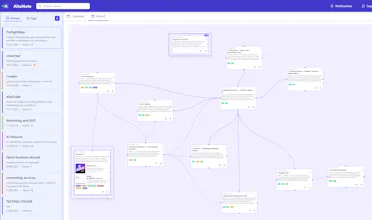
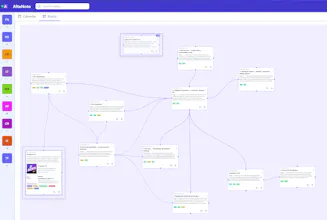
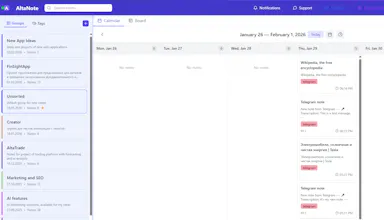
Your brain is non-linear. Your notes shouldn’t be linear either. AltaNote is an AI-powered thinking canvas where ideas connect themselves. Capture thoughts by voice, Telegram, web links, or files. Drop them onto an infinite canvas. AltaNote automatically builds connections, surfaces meaning, and helps you see the whole picture. Ask AI to analyze a note or an entire project — and get structured insights, summaries, and new ideas back. Stop organizing. Start thinking.
Free Options
Launch Team / Built With


ClarifyThe full-stack AI CRM for modern GTM teams
Promoted


The non-linear canvas approach resonates—I've had the same problem with Obsidian's folder structure not matching how ideas actually connect. The Telegram integration is smart for capturing fleeting thoughts. My biggest question is about the AI connection-building: does it use semantic similarity to link notes, or does it analyze actual content relationships? And when you ask AI to "analyze a project," how does it determine project scope—manual selection, or does it automatically identify clusters?
@easytoolsdev
When building connections, the neural network studies all the elements and builds a relationship based on the meaning of the elements.
One condition is that the connections - go from the older elements to the younger ones (by the time of creation), otherwise the canvas turned into a grid.
The project scope can be set in the project settings. When building relationships, the model uses it as the main vector.
@easytoolsdev
On the scale of the project, if not to say directly which nodes are needed, it will proceed from the context of the project. The agent receives the notes and tags along with the attachments. Next, he tries to build a system. If something didn't go according to plan the first time, you can repeat the request specifying what is expected.
Very cool - how does privacy work? Stays local?
@daniele_packard
Locally without encryption, interaction with the server is implemented with encryption.
Currently, work is underway to store data in encrypted form. Note content, attachments, and user data. The feature will be released in March.
@daniele_packard I would like to add that in the plans for a future release there is an application for the ability to work only locally without accessing the server. But the work has not started yet. We plan to release it in May.
@daniele_packard
If absolute confidentiality is needed, then access to the server must be blocked. But in this case, you lose touch with telegram and the AI assistant.