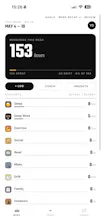
168 hours per week. Treat them like money. No streaks. No notifications. No leaderboards. Nothing to game — just an honest weekly receipt of where your time actually went. You're an adult. Budget your week like one.
No reviews yetBe the first to leave a review for 168: Time Budget
Maker
📌
Hey Product Hunt 👋
I built 168 because I realized something dumb: I budgeted my salary down to the dollar, but I had zero idea where my 168 hours/week went.
I had more time than money — and I was treating only one of them seriously.
So I started time-budgeting for myself. Same rules as money:
• Fixed pool (168h/week, no overdraft)
• Categories with limits (Sleep 56h, Work 40h, Family 20h…)
• Log entries when they happen
• Sunday review: spent vs budget vs over
A few intentional design choices that fight the genre:
1. Weekly cadence, not daily.
Daily tracking punishes a bad day. Weekly forgives one.
2. "Drift" is a first-class category — the time you can't account for.
Most trackers hide this. I made it loud. It's the most useful number
you'll see.
3. No streaks, no notifications guilt-tripping you, no leaderboards.
The whole pitch is the opposite of dopamine engineering.
Free. No ads. No subscription. iOS only for now.
The whole thing is built around one line that I keep coming back to:
"Saving money makes you comfortable. Tracking time makes you rich."
You can earn money back. You can't earn time back.
Happy to answer anything — about the build (Expo + React Native + native widgets), the design system, why I shipped 6 variants instead of 1, or why "Drift" matters more than the categories you pick on purpose.
What I'm most curious about: would you actually budget time the way you budget money? And if not — what's stopping you?
Almost every week I ask myself the same question - where did my time go? :) I work, I do things, but at the end I don’t clearly understand how I spent my 168 hours.
That’s why I like your idea of treating time like a budget.
I had a thought - maybe this could go further and show simple weekly insights, like why time is lost, not just where. I’ve been building AI tools, and this feels like a perfect fit here.
One is a multi-agent mafia game, where different AI agents play roles and interact with each other.
Another is a developer helper agent. it can write code, create tests, and help build small projects step by step.
In both cases I focus on agents that don’t just reply, but analyze and make decisions.
That’s why your “Coach” idea is interesting to me. It feels like a similar problem, but applied to time and behavior. I think it can give real insights, not just suggestions.
Hi @dudcsk97 ,
I really like this idea.
Almost every week I ask myself the same question - where did my time go? :)
I work, I do things, but at the end I don’t clearly understand how I spent my 168 hours.
That’s why I like your idea of treating time like a budget.
I had a thought - maybe this could go further and show simple weekly insights, like why time is lost, not just where.
I’ve been building AI tools, and this feels like a perfect fit here.
Hi@emanuel_tsaturyan ,
Thanks for your positive feedback!
Yes, I will be implementing that function in my next update. It's called "Coach", but was thinking about using Claude AI.
What's your product? and what can it do?
@dudcsk97
Sorry for the delay :)
I’ve built a couple of AI agent projects.
One is a multi-agent mafia game, where different AI agents play roles and interact with each other.
Another is a developer helper agent. it can write code, create tests, and help build small projects step by step.
In both cases I focus on agents that don’t just reply, but analyze and make decisions.
That’s why your “Coach” idea is interesting to me. It feels like a similar problem, but applied to time and behavior. I think it can give real insights, not just suggestions.