Launching today

Speechka
Real-time voice translation that sounds like you
69 followers
Real-time voice translation that sounds like you
69 followers
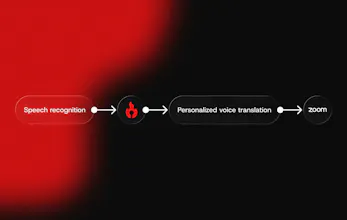
Speak naturally. Speechka translates your speech in real time and delivers it in your own voice across 44 languages. Use it for meetings, calls, livestreams, presentations, and conferences on macOS or Windows. Or try the full experience directly in your browser for free, with no installation required.



Speechka
A few days ago i had a meeting with a client and honestly communication was bit difficult cuz their English was not very strong and mine isn't perfect either :D. If i had Speechka with me at that time the meeting would have been much easier. and I am happy to see that you support 44 lang, including Punjabi which we don't see in many translation tools.
@dmytro_ivanchenko I wanted to ask about credit system. I didn't get a chance to fully check the offer, but how do the credits work? is it based on meeting time, Minutes used or something else?
At the end I'd just say that your product is really good. Wishing you all the best with the launch :)
Speechka
@tahir21 Thank you so much for your kind wishes! Regarding credits usage, they're used when you run translation mode, and 1 credit equals 1 minute of use. You can always purchase additional credits if you've used up the ones included in your subscription. But I recommend trying the free trial first to see if the app works for you.
Refocus
The 1.5s average delivery time is the number that jumped out at me. I build Callie Care, a voice AI that phones aging parents every day, and past roughly two seconds of dead air an older person assumes the line dropped and starts talking over you. How do you handle turn-taking at that latency: gate on end-of-utterance detection, or stream a partial translation and correct as you go? Long mid-sentence pauses from slower speakers wreck naive VAD thresholds for us, and I would guess translation makes that harder rather than easier.
Speechka
@igorgurovich Once the voice-over stream starts, there's practically zero delay between segments, which makes the stream feel seamless. We don't wait for the speech to finish, we start as soon as the thought becomes semantically clear, and this seamlessness lets us preserve the full context instead of fragments.