
DueDocs
AI property contract review for Australian buyers and pros.
66 followers
AI property contract review for Australian buyers and pros.
66 followers
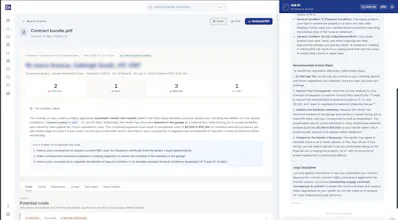
DueDocs is AI‑powered contract review for Australian property buyers, investors, and conveyancers. Upload a Contract of Sale or vendor statement to see key risks, negotiation angles, Voice Agent and AI Chat to answer any question, and suburb insights with source‑linked findings in under 5 minutes. Built for buyers at open homes and teams handling volume via bulk upload. First report free. Check out our sample: https://duedocs.com.au/sample Informational only, not legal advice.






@anuj_sachan1 fantastic.
Dial
disclosure regimes are genuinely different state to state in Australia - Section 32 is a Victoria thing, NSW has its own contract/disclosure requirements, and it's different again in QLD. does the model actually know which state's rules apply based on the document format and check against that state's specific requirements, or is the 40+ risk category scan more of a general pattern applied everywhere regardless of jurisdiction?
@galdayan Fair question, and you're right that disclosure regimes differ state to state.
We detect jurisdiction from the document itself before analysis: Section 32 / Sale of Land Act → VIC, Contract for Sale + vendor disclosure annexures / s10.7 → NSW, Form 30 → QLD, Form 2 → SA, and equivalents for WA, TAS, NT, and ACT.
The ~40 risk categories are universal — title, easements, planning, building compliance, body corporate/OC, outgoings, contract terms — because buyers care about the same things everywhere. State-specific rules layer on top: statutory charges, cooling-off periods, owner-builder warranty periods, planning overlay systems, and authority names. We also guard against cross-state errors (e.g. GAIC on an NSW doc).
This is AI-assisted due diligence to help you spot issues faster and ask your conveyancer better questions, not a replacement for one.
Dial
@anuj_sachan1 that's a much more complete answer than I expected, detecting jurisdiction straight from the document format rather than asking the user to select their state upfront is the right call since people mislabel or don't even know which form applies. the "not a replacement for a conveyancer" framing is also the right way to position this, good to see it stated plainly instead of oversold
How do the negotiation angles hold up once both sides run the same report? If this catches on, the vendor's conveyancer will be reading it before the buyer ever opens the contract.
@vollos Great point, and I actually agree this is where things are heading.
If both sides run the same report, the “angles” don’t come from secret information, they come from how quickly and clearly you can use the facts. DueDocs’ job is to surface the risks and odd clauses in plain English so buyers and their conveyancers can prioritise what matters and decide how hard to push, not to replace strategy or hide anything from the other side.
If a vendor’s conveyancer reads the report first, that usually leads to cleaner negotiations: fewer surprises, faster professional conversations, and buyers who walk in better informed instead of signing blind.
Dial
for something touching property contracts the real question for me is liability, not accuracy. if the tool misses a genuinely risky clause and someone signs based on a clean-looking report, is that positioned as "supplement your conveyancer, don't replace them" with clear disclaimers, or are people actually using this standalone to skip paying for a solicitor review
@omri_ben_shoham1 That's a really important question, and one we thought about from day one.
DueDocs is designed to complement conveyancers and solicitors, not replace them. Every report clearly states that it isn't legal advice and should be used alongside professional legal review.
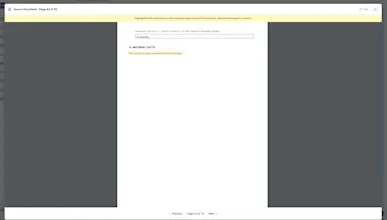
Our goal is to help buyers understand their documents earlier in the process, highlighting potential risks, explaining legal language in plain English, and providing page and clause citations so users can verify every insight in the original contract.
Ultimately, the legal advice should always come from a qualified conveyancer or solicitor. We see DueDocs as helping buyers ask better questions and have more informed conversations, not encouraging them to skip professional advice.
One thing that would help a lot is comparing clauses side by side against a standard template so I can see at a glance what is unusual or missing. Even a simple diff view would make negotiation prep faster when reviewing contracts at open homes.
@cemreb6dj Thanks, I really like this idea.
One of the tricky parts is that there isn't a single "standard" contract in Australia. Every state has its own contract and disclosure requirements, and even within the same state it's common to see additional special conditions added by the seller.
That said, I completely agree with the underlying idea. As a buyer, you don't necessarily want to read every clause, you want to know what's different, what's unusual, and what deserves your attention.
A "what's changed" or comparison view is something we've talked about internally because it would make reviewing contracts much quicker, especially when you're moving fast after an open home. Thanks for sharing it, it's exactly the kind of feedback that helps us decide what to build next.
Buying a place is one of those moments where you nod along to pages you barely understand and hope nothing bites you later. Having a calm second pair of eyes on all that fine print feels genuinely reassuring, Anuj.
@fanny_guillou Thanks, Fanny. I couldn't agree more.
For most people, buying a property is the biggest financial commitment they'll ever make, yet they're expected to work through pages of legal language under tight timeframes. That's exactly why we built DueDocs, to act as that second pair of eyes, helping buyers understand the fine print, surface potential risks, and feel more confident before they sign.
We believe informed buyers make better decisions.