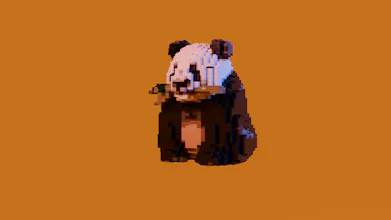
Type a prompt, get a buildable brick model. The AI (image + mesh gen) is just the front door. The real work is the brick-placing engine: voxelizing the shape, tiling it with actual LEGO-compatible parts, staggering seams for strength, running structural analysis (gravity load) to catch weak points, then refining with slopes and tiles (currently a 55 part brick library). You get a realldr file, parts list, and step-by-step PDF instructions. Renders below done with the Mecabricks Advanced add-on.
After looking for what already exists, most "AI LEGO generators" that just render a nice picture and call it done - you can't actually buy those bricks and build it. So I built the real pipeline: turn the shape into a voxel grid, tile it with real, purchasable brick parts (staggering seams so it doesn't crack apart like a loose stack), then run structural analysis - connectivity graph, gravity load - to catch anything that'd fall apart, and auto-repair it before it reaches you.
The AI image/3D generation is the easy, bought-in part. The real hard problem was always the brick-placement engine.
(Not affiliated with the LEGO Group - LEGO® is a trademark of its owner.)
Getting the .ldr file, parts list, and step-by-step PDF together is a really nice touch. It turns the result from something you can look at into something you can actually sit down and build.
A parts-cost estimate or a way to optimize the model for pieces someone already owns would be really interesting. Being able to say build this using the bricks in my collection would take the idea to another level.
BrickForgerAI
After looking for what already exists, most "AI LEGO generators" that just render a nice picture and call it done - you can't actually buy those bricks and build it. So I built the real pipeline: turn the shape into a voxel grid, tile it with real, purchasable brick parts (staggering seams so it doesn't crack apart like a loose stack), then run structural analysis - connectivity graph, gravity load - to catch anything that'd fall apart, and auto-repair it before it reaches you.
The AI image/3D generation is the easy, bought-in part. The real hard problem was always the brick-placement engine.
(Not affiliated with the LEGO Group - LEGO® is a trademark of its owner.)
Bababot
Getting the .ldr file, parts list, and step-by-step PDF together is a really nice touch. It turns the result from something you can look at into something you can actually sit down and build.
Serand
A parts-cost estimate or a way to optimize the model for pieces someone already owns would be really interesting. Being able to say build this using the bricks in my collection would take the idea to another level.