
AgentTM
Time-travel debugging for AI coding agents
22 followers
Time-travel debugging for AI coding agents
22 followers
A local debugging tool that records managed Codex sessions and workspace checkpoints so you can inspect changes and restore earlier files into an isolated Git worktree.


Free Options
Launch Team

Build your Framer site from Claude, Codex or CursorYour AI agent builds it. You review before it goes live.
Promoted
Hey Product Hunt! 👋
I'm excited to introduce AgentTM (Agent Time Machine), a local-first debugging tool I've been building for AI coding agents, starting with OpenAI Codex.
Why did I build this?
As AI coding agents become more capable, they execute commands, modify multiple files, and perform complex operations. But when something goes wrong, understanding what happened during execution can be difficult.
I wanted a way to inspect an agent's activity, explore earlier workspace states, and recover previous code without disrupting my current work.
That's how AgentTM started.
What AgentTM offers:
Execution Timeline: Record supported Codex events and inspect agent activity.
Workspace Checkpoints: Capture baseline, final, and supported operation-boundary snapshots.
Historical File Explorer: Browse earlier versions of your source files.
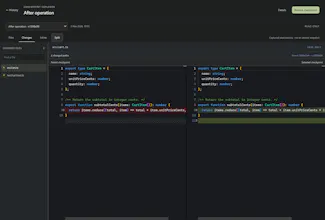
Code Diffs: Compare changes between checkpoints.
Safe Restoration: Restore previous files into isolated Git worktrees.
Interactive Codex Chat: Chat with Codex through the native Windows desktop app.
Conversation Continuation: Resume supported saved Codex conversations.
Encrypted Backups: Protect and restore local AgentTM history.
Local-First Storage: SQLite and SHA-256 content-addressable storage.
Storage Management: Integrity diagnostics, session cleanup, and garbage collection.
Built with: Go, SQLite, React, TypeScript, Git worktrees, and Wails.
The CLI and browser dashboard support Windows, Linux, and macOS. The native desktop app is currently Windows-only.
AgentTM is still an early public beta. It complements Git rather than replacing it, and checkpoints represent observed workspace states rather than deterministic execution replay.
I'd love your feedback!
What debugging features would make AI coding agents easier to work with? Would you find checkpoint inspection, code provenance, or support for additional coding agents most useful?
GitHub: https://github.com/Jyotishmoy12/AgentTM
Thanks for checking it out! 🙌
If you find AgentTM interesting or useful, I'd really appreciate it if you could give the repository a star (⭐) on GitHub! It would mean a lot and help the project reach more developers.
Thanks for your support!
Building AgentTM during Hypership Day!
I'd love to hear from developers using Codex or other AI coding agents.
What's one feature you wish existed for debugging agent activity, exploring session history, or recovering earlier workspace states?
I'm actively improving AgentTM and would genuinely appreciate your feature requests, feedback, or even criticism.
If there's something you'd find useful, drop a request here. I'd love to explore it!
To your question, support for more agents would be the one for me, with Claude Code first. Codex had a lot of my work for a while this summer, but I'm mostly back on Claude Code now.
@simon_moxon Thanks a lot for your comment! Yes, adding support for Claude Code is definitely my next priority. :)
I'm mostly on Claude Code rather than Codex, but the restore-into-an-isolated-worktree part is what caught my eye — the scariest agent moments for me are the ones where it quietly rewrites something good and I only notice later. Being able to browse the earlier version of a file and pull just that back without touching my working tree feels like a much safer undo than a git reset. Does the timeline show which files changed at each checkpoint, or do you have to open each one to find out?
@jcbuilds Thanks so much for the thoughtful feedback! Really appreciate it.
And yes, that's exactly the problem I wanted to address with AgentTM being able to recover an earlier workspace state without disturbing your current work.
To answer your question: AgentTM lets you inspect the files captured at each checkpoint and compare changes against the previous checkpoint, so you don't have to manually open every file to figure out what changed. You can explore the historical files and their diffs before deciding what to restore.
One distinction worth mentioning: AgentTM currently restores captured workspace states into isolated Git worktrees rather than directly restoring individual files into your active working tree.
I'm curious, though would a quick list of changed files directly on each timeline checkpoint be useful to you, so you could see what changed without opening the checkpoint explorer?
Appreciate the distinction between a saved workspace state and deterministic replay. Showing where checkpoint coverage starts and ends would help someone judge what they can actually recover.