
Polylane
AI agents that fix issues before they become incidents
470 followers
AI agents that fix issues before they become incidents
470 followers
Nobody should be on call. Polylane connects your code, infra and observability data, investigates every issue and opens a pull request with the fix.
This is the 4th launch from Polylane. View more

Polylane for Cloudflare
Launched this week
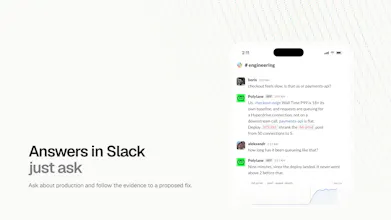
Polylane catches issues across your Cloudflare apps, follows the connections between Workers, databases, queues and storage, and investigates the root cause using your code, logs and recent changes. When the fix is in your code, it opens a pull request for review. Connect with one read-only Cloudflare token.




Free Options
Launch Team

Framer AI AgentsDesign and publish professional sites with AI
Promoted


Hey Product Hunt 👋
Polylane is built on Cloudflare. We use Workers, D1, Workflows, Durable Objects, Queues, R2… a lot of Cloudflare.
That flexibility is a big part of how we’re able to build Polylane. It also means that when something goes wrong, figuring out why can take some digging. Is it the Worker? The database it talks to? A queue backing up? A Durable Object somewhere in the middle?
Polylane for Cloudflare connects those pieces, investigates what’s going wrong, and opens a pull request when the fix is in your code.
We use it heavily to build and run Polylane itself. It helps us ship hundreds of PRs a week safely, and we’ve put a lot of work into making it useful for our own team.
We hope it’s as useful for you as it is for us. Give it a try, and let us know what you think. We’ll be here answering questions.
@boristane full circle moment
I run a couple of Workers and D1 apps, and the incident I worry about most isn't in the code. It's a deploy that ships code expecting a column before the D1 migration that adds it has been applied. Does Polylane compare the Worker's code with the migrations actually applied to the database, and say "apply migration 0007" when that's the fix, rather than opening a PR?
Also, the single read-only token is the right default for anything that reads production.
Read-only access is the only sensible way to hand off monitoring. If an incident tool asks for write permissions across cloud workers and storage to find root causes, I walk away.