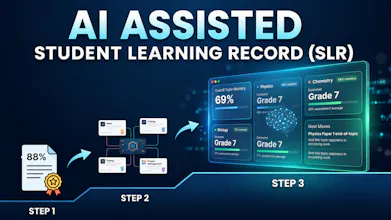
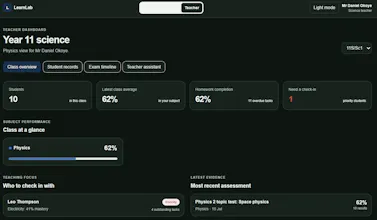
LearnLab turns a Student Learning Record (SLR) into structured facts students, teachers, parents and AI can use. It connects assessments, confidence, homework and exam scope to explainable next steps, class patterns and gaps. The fictional demo uses deterministic calculations and read-only AI explanations - never real pupil data or invented progress.
What did GPT-5.6 Sol, Terra and Luna unlock that made your launch possible?
Maker
GPT-5.6 with Codex helped turn LearnLab from an evolving idea into a tested Build Week product. It accelerated codebase inspection, targeted implementation, debugging live login and persistence issues, regression testing, production builds, and documentation.
Codex let me focus on product decisions: separating demonstrated mastery from student confidence, linking exams to exact AQA specification points, and keeping fictional student, teacher and parent contexts distinct.
GPT-5.6 was used to build and improve LearnLab, not as the runtime tutor model. The dashboard tutor is a separate quota-limited Groq integration, and all records are fictional.
Report
Maker
📌
I built LearnLab because academic information is usually fragmented: assessment results, homework, confidence and upcoming exams sit separately, making it hard for learners and teachers to see what actually matters next.
The idea is a Student Learning Record: structured, permission-scoped information that people can understand and that AI can use responsibly to explain the record rather than guess or invent progress.
This Build Week version uses fictional data and deterministic calculations, with read-only AI explanations layered on top.
I’d love feedback on the SLR concept: what information would make a learning record genuinely useful, and what guardrails would you expect before AI could support it?