
Linguin. Live Multilingual Dictionary
120+ languages. Learn and practice languages in your context
10 followers
120+ languages. Learn and practice languages in your context
10 followers
Linguin helps you learn language by understanding meanings, not just translations. Look up any word, idiom, or phrase in 120+ languages, save it to your dictionary, practice it with meaning-based exercises, then use it in AI conversations built around what you're learning until it feels natural.

Free Options
Launch Team / Built With


AskMyPagesTurn handbooks and PDFs on WordPress into cited answers
Promoted
Hey! I'm Alexander, I'm building Linguin.
English is my second language, so this one is personal.
I tried everything. Duolingo felt like a game. Courses taught grammar no one cares about. Translate apps lose the context. Preply kept burning my lessons. Tutors cost too much.
So I ended up with my own routine for every new word/phrase: google it, translate it, google how people use it, throw it in some cards to memorize, then try it in a real conversation.
That's a long way to learn one word.
So I put all of it in one place, and built an assistant on top that helps me figure out what to work on and how to get better.
Linguin started back in 2021 as a simple dictionary: look up any word, see how people use it.
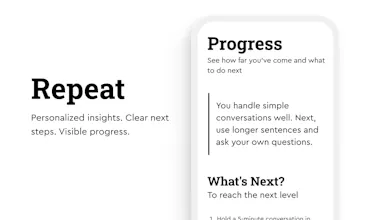
Now it's the whole learning loop: look up > exercise to connect the word with its meanings > practice talking until it feels natural > get feedback > repeat.
There's still a lot to work on, but it works, and it's helping me learn faster than ever right now.
The meaning-first approach is a nice change from basic flashcards, and I was surprised how well the AI conversation stuck to words I'd just saved. Wish the idiom explanations went a bit deeper, but solid for daily practice.
@hamdilych Thanks, Hamdi! Really appreciate the feedback. You're right about the explanations.
Right now, every entry can go through three stages:
A quick version built from web signals, our knowledge base, and AI. This is what users get the first time an entry is looked up.
A richer version that digs deeper into web sources, discussions, and real-world usage. It's generated in the background and is usually ready within a few minutes.
A fully polished version after it's reviewed by our AI editor, and sometimes by a human editor if something needs extra attention.
One thing I'm actively working on is making each stage much closer to the final quality, so users get deeper explanations from the very first lookup.
Also, users can contribute to any entry. Those contributions help improve future versions of the entry. Every entry has an expiration date, so the dictionary keeps evolving over time.
the meaning-based exercises actually made me think instead of just memorizing, which i did not expect from a dictionary app. saving idioms in spanish and getting them back in conversation practice feels like a nice loop.
@pnar1050939 Thanks, Pınar! Love to hear that. That's pretty much the whole idea behind Linguin. If anything felt off or you think something's missing, please let me know. That'd help a lot.