
ShipFit
Kill bad ideas fast. Make good ideas win. Validate for free!
8 followers
Kill bad ideas fast. Make good ideas win. Validate for free!
8 followers
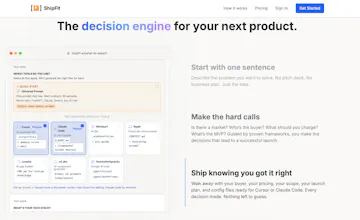
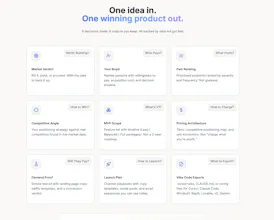
Kill bad ideas fast. Make good ideas win. ShipFit is the pre-code decision engine that turns a vague idea into a product worth building. One sentence in, a ship-ready playbook out: 9 sequential decisions guided by 55 proven frameworks and real data, not AI slop. 24% get a kill verdict. Leave with your buyer, price, scope, launch plan, and build-ready configs for Cursor, Claude Code and more. From $5, no card to start.






Curious how much of my input actually shapes the verdict vs the frameworks doing the heavy lifting - if I give it the same idea worded two different ways, would I get two different ship scores?
@birsenu6d2 Once you get past the first question "Is it worth building" (i.e. is there even a market), the frameworks do the heavy lifting on the subsequent questions to help you make the best choices. It's really powerful on "How to Win?" as it uses frameworks like Blue Ocean to come with adjacent ideas to yours to solve the problems that you want to fix for the ICP that you selected.
Fly Private, Free!
Put up a landing page offering free private jet flights and thousands sign up.
A landing page with email capture tells you someone clicked a button. That is curiosity, not demand. If you put up a landing page offering free private jet flights, thousands would sign up. It does not make it a business. A waitlist tests curiosity, not viability, and you will get the sign-ups, feel validated, then spend months building something nobody pays for.
Ten people describing the problem in their own words, and one person willing to do the ugly manual version with you, is better validation than two hundred email sign-ups from strangers who will never open your launch email. Demand only means something once there is a product and a price attached.
Real validation answers what a landing page cannot: who specifically pays, what they pay for the workaround now, what competitors miss, how you price it, and the smallest thing worth building. ShipFit measures willingness to pay at a real price point, not clicks. That is the difference between feeling validated and being right.
ShipFit answers what a landing page cannot: who specifically pays, what they pay for the workaround now, how you price it, and the smallest thing worth building. It measures willingness to pay at a real price point, not clicks.
I put this into try shipfit.ai. It runs an idea through 9 decisions with real data before you commit.
Why I built ShipFit: building got free, and I kept building the wrong things
I built ShipFit because I got tired of being the problem.
I've shipped a lot of side projects. Cursor and Claude Code meant I could go from idea to deployed in a weekend. That should have been a superpower. Instead it was a trap. I'd fall for an idea, build it beautifully, launch to silence, and only then ask the question I should have asked first: was anyone ever going to want this? The code was never the bottleneck. My judgment was.
That's the thing nobody says out loud about this era of building. AI tools removed the friction that used to filter bad ideas. It used to take months to build something, and that cost made you at least a little careful. Now you can ship a wrong idea faster than ever. 42% of startups still die from no market need. Building faster doesn't fix that. It just lets you be wrong more efficiently.
I looked at what was out there to help. Most of it made things worse. The "validate your idea" tools mostly told me my idea was great, because that's what keeps you clicking. The AI cheerleaders were confident and wrong in the same breath. What I actually needed was the opposite of encouragement. I needed something that would force me to make the hard calls before I opened the editor, and that wouldn't let me hand-wave the ones I wanted to skip.
So I built that. ShipFit forces nine decisions in sequence before you write any code: is it worth building, who actually pays, what actually hurts, how you win, what's really V1, how you charge, whether they'll pay, how you launch, and what you export into your coding tool. You can't skip ahead. Each one is grounded in real data, not a confident guess — real competitor sites, prices with source links, complaints pulled from actual reviews. The thing I couldn't get from a model that just wanted to please me.
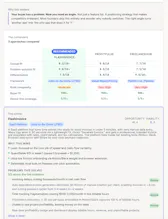
The part I'm most attached to is that it's willing to tell you no. Around a quarter of ideas that run the full process come out the other side with a kill verdict. That's not the system failing. That's the whole point. A fast kill isn't a loss, it's the quarter you get back to spend on the idea that actually pays. Building the tool that tells me to stop was the most useful thing I could have built for myself.
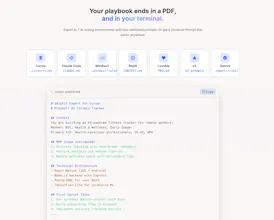
It ends where you actually work: it exports the decisions into config files for Cursor, Claude Code, and the rest, so your agent builds the right thing instead of a technically-correct wrong thing.
It starts at $5 if you want to run your next idea through it. But I'm genuinely more interested in the conversation than the click: for those of you building fast with AI tools, how do you decide what's worth your weekend before you commit? Or do you just build and find out?
Ran my half-baked SaaS idea through it and got a brutal kill verdict plus solid reasons why. Loved that it didn't try to sugarcoat, and the scope cut came in way tighter than I'd have written myself.
@zgreitimee8r I quite enjoyed building what I call "The Roast". Tried to bring my 3 decades of product development and marketing to this tool. Glad you like it!