
Shavely
Real-time multilingual chat for global teams
69 followers
Real-time multilingual chat for global teams
69 followers
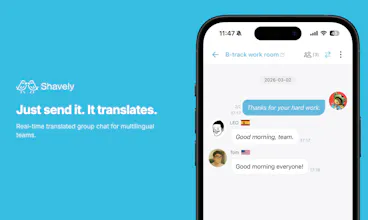
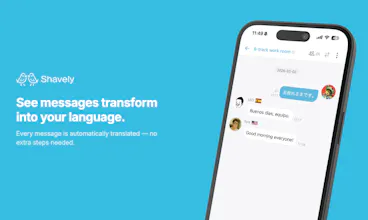
Shavely is a mobile multilingual team chat app that automatically translates every message in real time. Messages are automatically translated into each user’s language across 29 supported languages, allowing international teams to communicate clearly without switching apps or copying text into translators.



Nice, do you plan to integrate this to other tools that are widely used? I understand that the focus lays on internal teams but I think this is something useful for everyone and sooner or later we will have such options on the majority of the platforms.
@viktorgems Thanks so much for the thoughtful feedback, Victor 🙏
You're absolutely right — we believe real-time translation should be available wherever people communicate, not just inside Shavely.
We're currently working on opening up our API so other platforms and tools can integrate our translation capabilities. One of the first areas we're exploring is cross-border e-commerce customer support, where multilingual communication is especially critical.Really excited about what's ahead.
Are there any specific tools or platforms you'd personally love to see Shavely integrate with?
Many Thanks,
@tatsuya_murakami are you planning to do it solely for communication, I mean messages only or will the future API be aplicable to let's say blocks of texts and so on?
@viktorgems Great question. While our core focus is real-time messaging, we're designing the API to support longer blocks of text as well — such as customer support tickets, knowledge base articles, internal documentation, and other structured content.
So it definitely won’t be limited to chat messages. Our goal is to make multilingual communication seamless across different formats and use cases.
@masebuilds @Mason Bachmann Thanks so much, Mason — really appreciate that Sales teams working across regions like Asia and Europe are exactly the kind of teams we had in mind when building Shavely.
Yes — messages are encrypted in transit, and we’re continuing to strengthen our security architecture as we grow. Because messages are processed for real-time translation, we currently prioritize secure transmission and responsible handling of message data.
Security and privacy are very important to us, especially for business use cases like international sales teams, so this is an area we’re actively improving.
Daily operations but specifically incident response.
When an alert fires and on-call engineers need to coordinate across time zones and languages, language friction doesn't just slow things down. It compounds the blast radius of the incident.
A 30-minute fix becomes a 3-hour outage when half the call is spent clarifying what "the database is slow" actually means in context.
Curious if Shavely has considered the engineering and DevOps team use case the stakes there are arguably higher than in sales or support.
One more real-world story we’d love to share:
A hotel cleaning company with staff from multiple Southeast Asian countries started using Shavely for daily coordination. Before, instructions often had to be repeated in different languages, and small misunderstandings would slow things down.
After introducing automatic per-user translation, they reported fewer clarification messages and smoother task handoffs between shifts. Seeing Shavely work in a fast-paced, multilingual environment like that reinforced why we’re building this.
It’s a small example, but it shows how invisible language friction can impact real operations.
Where else do you think this kind of friction exists?
Curious to hear from others here:
If you're working in an international team, where does language friction show up the most?
Sales conversations?
Customer support?
Daily operations?
Would love to learn where this problem shows up in the real world.