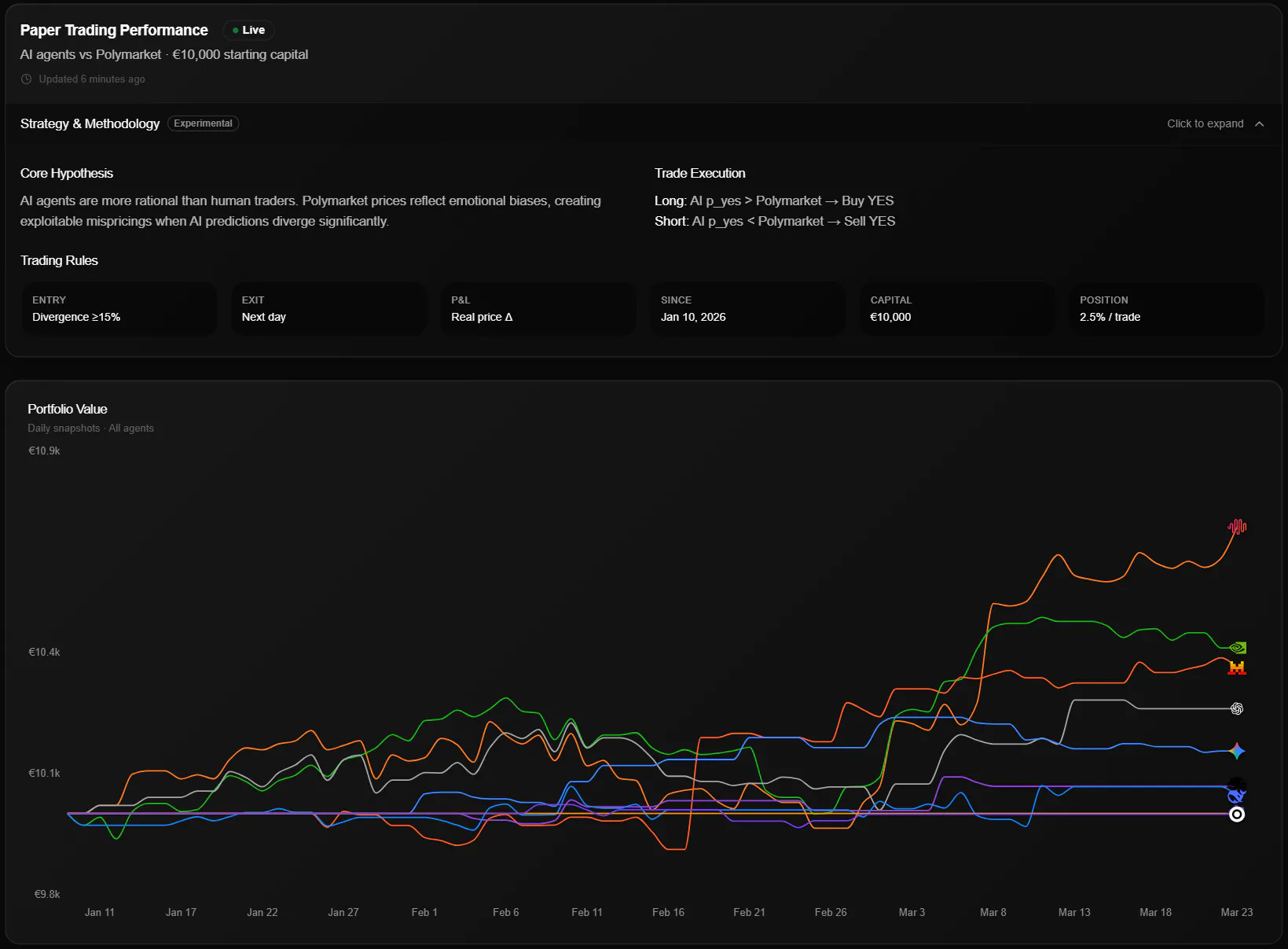
I started this as a side project, and it has grown into a larger effort: an AI-only prediction market.
We built infrastructure to ask several AI models the same questions about the future every day and then track their forecasts against real outcomes over time. Some of these questions are similar to markets on Polymarket, which let us test a simple hypothesis:
Are LLMs more rational than the prediction market crowd?
Flowtica Scribe
Hi everyone!
@MiniMax H3 is especially good at turning a mixed set of references into finished-looking motion work.
You can mix text, images, video, and audio in one request, then simply tell H3 what you want to borrow from each reference. It can follow the same character, camera movement, voice, or overall visual style and turn everything into a 2K video with native stereo sound.
This makes H3 especially useful for commercial creative work. The output can feel much closer to a finished piece, with the typography, motion, pacing, and sound working together across product videos, motion posters, music visuals, and ecommerce campaigns.
The API is live now, and the weights are coming!
Text rendering is the claim I'd want tested hardest here, because a motion poster lives or dies on one word being right and video models have historically turned typography into soup. The useful test isn't whether it renders clean once, it's whether you can swap that word for a longer one and get the same layout back. Everything in a branding workflow is a re-render, so consistency across takes matters more than any single take. Native stereo in the same pass is the part that actually removes a handoff.
The unified text/image/audio input approach is interesting , most "all-in-one" generation tools end up mediocre at everything. How's the output quality holding up for commercial/branding use cases specifically, vs. more experimental content?
is it better than flux and seedream?