gm legends, happy Wednesday.
Framer's canvas can now design back, the person who sold a company to Figma shipped AI background processes for your repo, and a bot just picked up the phone at your dentist's office.

Wednesday, Jun 17
Presented byDropbox Sign
Framer 3.0 ships Agents that can see and edit your canvas directly: design entire pages, iterate on sections, create components, write code, connect to your CMS, and manage SEO settings. They plug into Claude Code, Cursor, and Codex. Koen Bok and Jorn van Dijk also added Branching for safe experimentation without touching the live site, and a Community tab built into the product.
🔥 Our Take: Framer has been running on actual React components since 2013, not visual layers. That's why this bet is credible: AI canvas agents need to generate into your component system without breaking it. Figma is shipping AI canvas too, with far more users. But Framer connects to Claude Code directly: your coding AI now handles design. That's not a Figma feature. That's a different product. This wins a segment Figma isn't fighting for.
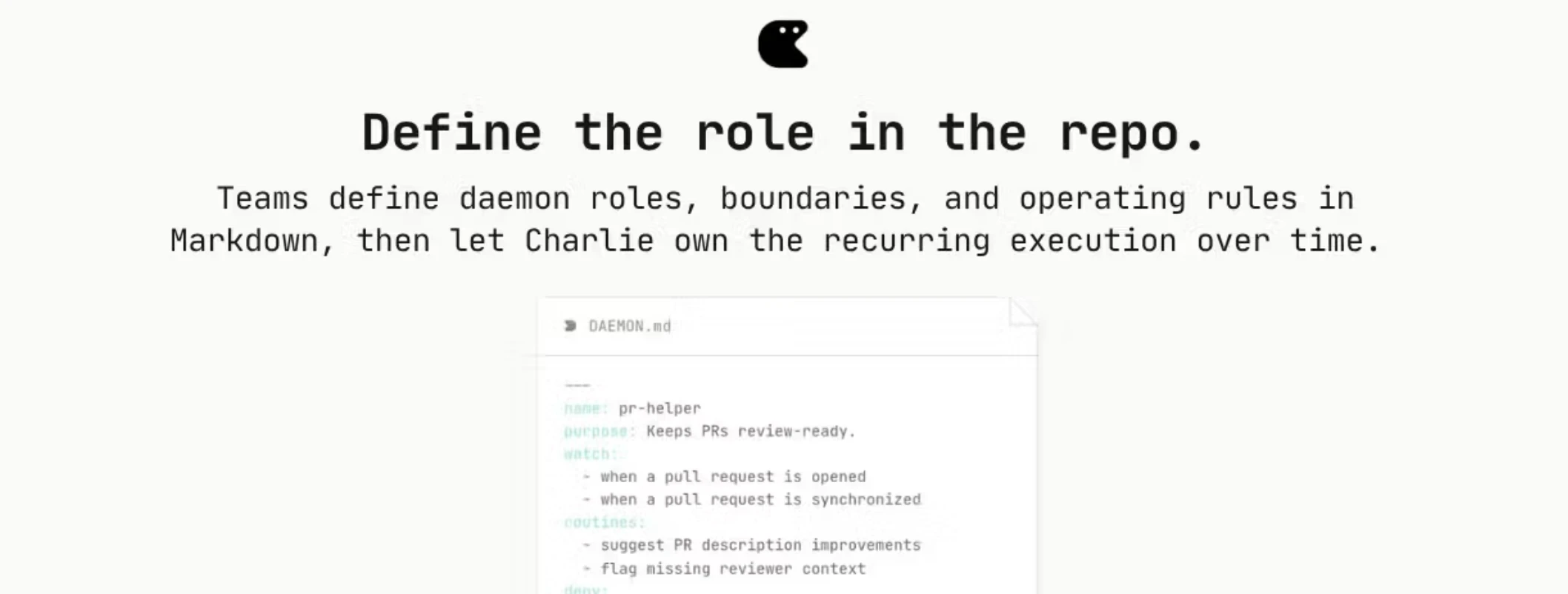
Daemons by Charlie Labs are always-on AI background processes, defined in .md files, that monitor your PRs, issues, CI pipeline, docs, and Sentry errors around the clock and post reviewable updates where your team already works: GitHub, Linear, and Slack. Riley Tomasek built Flight before Figma acquired it, then Standard Resume, then DexaAI. Daemons is the next thing.
🔥 Our Take: The AI coding tools everyone's using are creating a second problem: more code means more operational debt nobody's handling. Riley Tomasek built Flight for the gap where design hands off to engineering. Same insight, different layer. CodeRabbit does one thing. Dependabot does one thing. Daemons watches everything. GitHub will build this. The window for a third-party winner here is narrower than the launch makes it look.

ClawEase handles appointment booking for small businesses across phone, WhatsApp, and web forms — it captures the inquiry, checks availability, books it, and sends confirmation, without a human touching it.
🔥 Our Take: Dentists have been pitched scheduling software for years. They don't use it because their patients don't click links — they call, they text, they send a WhatsApp at 9pm. Someone at the front desk still handles all of that. ClawEase does it instead, across phone, WhatsApp, and web. Calendly is for booking Zooms. This is for everywhere else.
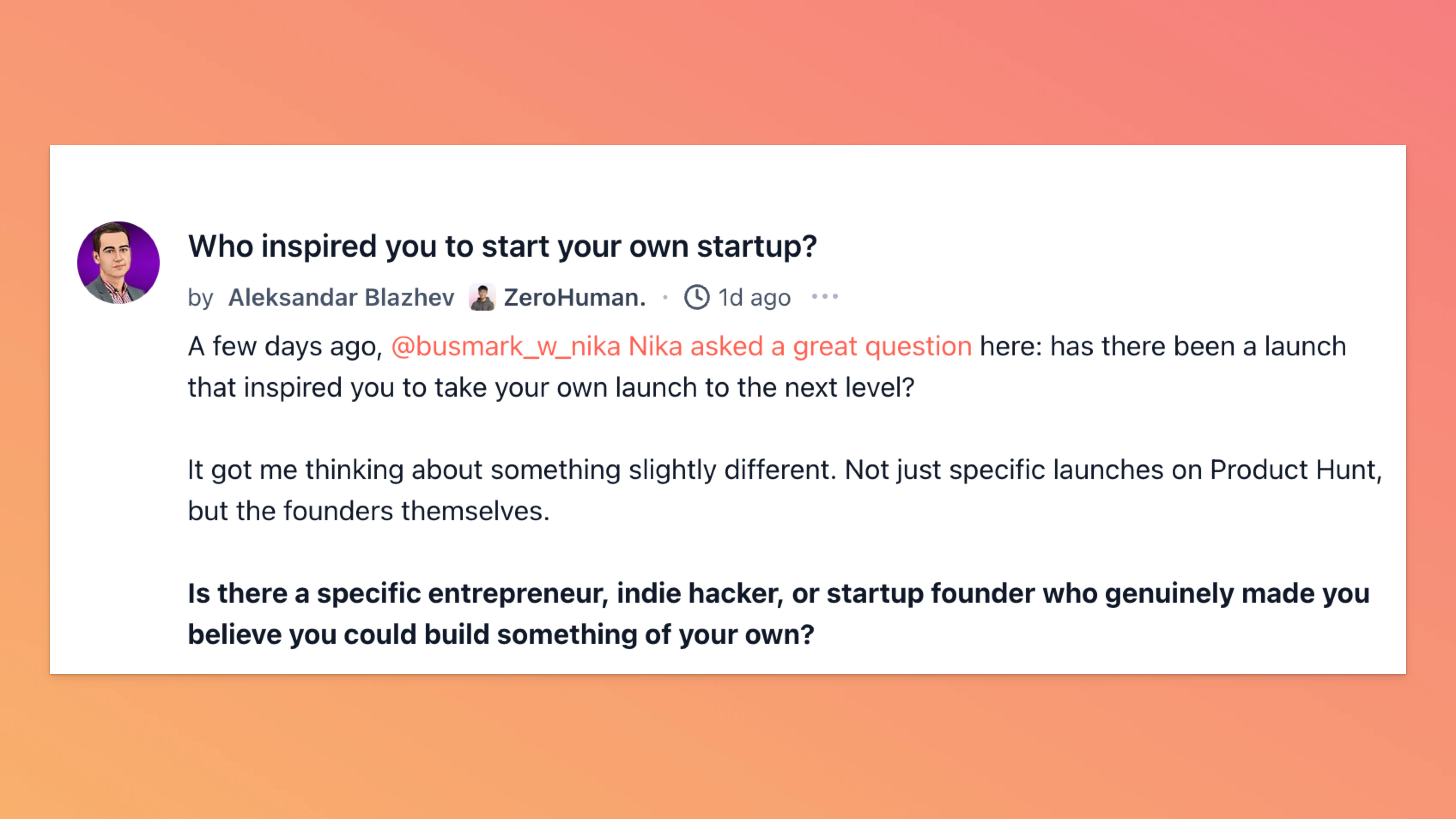
Aleksandar Blazhev (@byalexai) asked the general forum which entrepreneur actually made it feel possible to build something. Not who is famous but who made the leap feel real.
The answers mostly skipped the billionaires. Jose Sanchez was inspired by watching engineers at fast-growing startups up close, not from a talk or a book. Rohan Chaubey discovered midway through the thread that building startups was leading him toward marketing, not founding. The pattern across almost every answer was proximity over fame.
Varun Mishra landed the line the whole thread was circling: "Billion-dollar founders make entrepreneurship look possible in theory. People who are slightly ahead of you make it feel possible in practice."

 303 •
 Mac


