gm legends. It’s Sunday
In this week’s roundup: OpenAI says goodbye to Sora. We get an unpolished account of what it's like to lock in and sell to your heart's content, and Mona from Murror has a different take on 'Ship fast and break things.'

Sunday, Apr 05
Presented byDropbox Sign
OpenAI is shutting down Sora, which is a pretty sharp comedown for a product that was pitched like the future of video. It launched as a TikTok-style app for AI clips, shot to the top of the App Store, and six months later it is being wound down.
The story is not really one big dramatic failure. It is a pile of very expensive problems. Video generation costs a lot, user interest dropped off fast, and Sora kept attracting the kind of deepfake, copyright, and moderation headaches that make a flashy demo look a lot less fun in production.
So this reads less like AI video is dead and more like OpenAI deciding this particular experiment was not worth the chips, the mess, or the distraction.

Mahmudul wrote a refreshingly unpolished post about making $2,398 in 48 hours from Slashit, and the useful part is he does not pretend it was magic. It was 100 outreach messages, Reddit posts that pulled 25k+ views, Indie Hackers, asking users for reviews, fixing bugs on the fly, and barely sleeping. Good one if you want the less glamorous version of early traction, where the numbers are small, the work is very manual, and it still feels huge when strangers start paying.
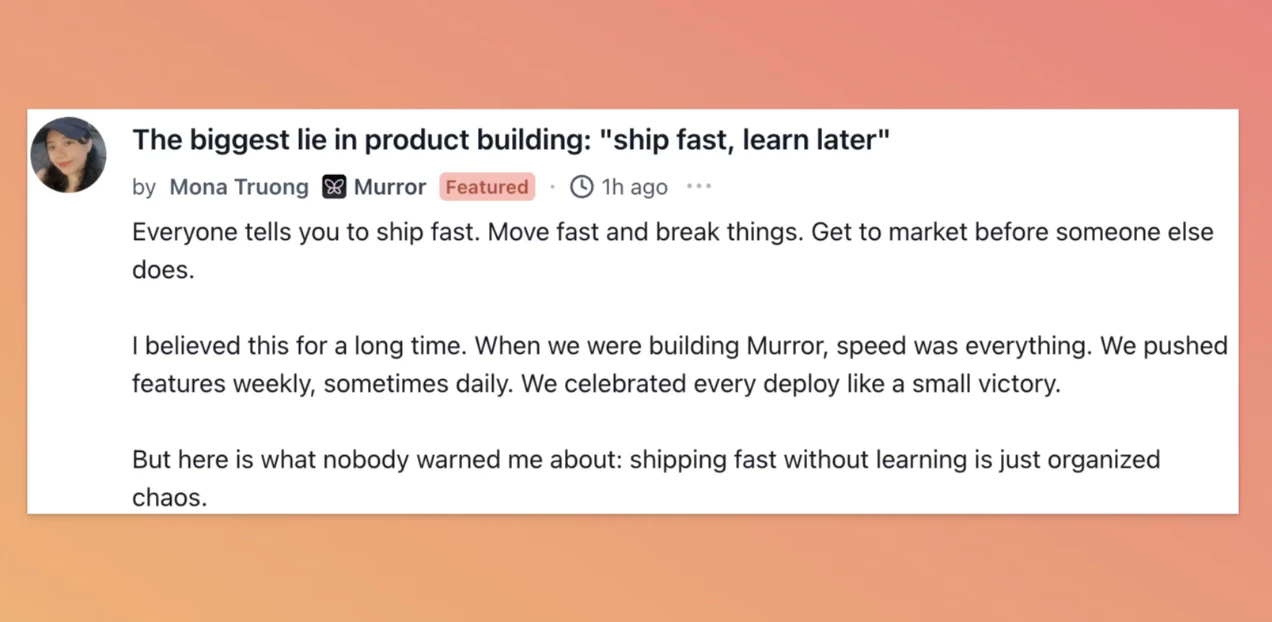
Mona wrote about the part people leave out when they romanticize speed. She and her team were shipping constantly, features looked polished, demos looked good, and users still did not care. The shift came when they stopped sprinting for a minute, sat with a few users properly, and realized the real problems were tone, clarity, and feature overload, not output. Good post if you have ever confused moving quickly with actually learning anything.


 2 •
 Twitter

