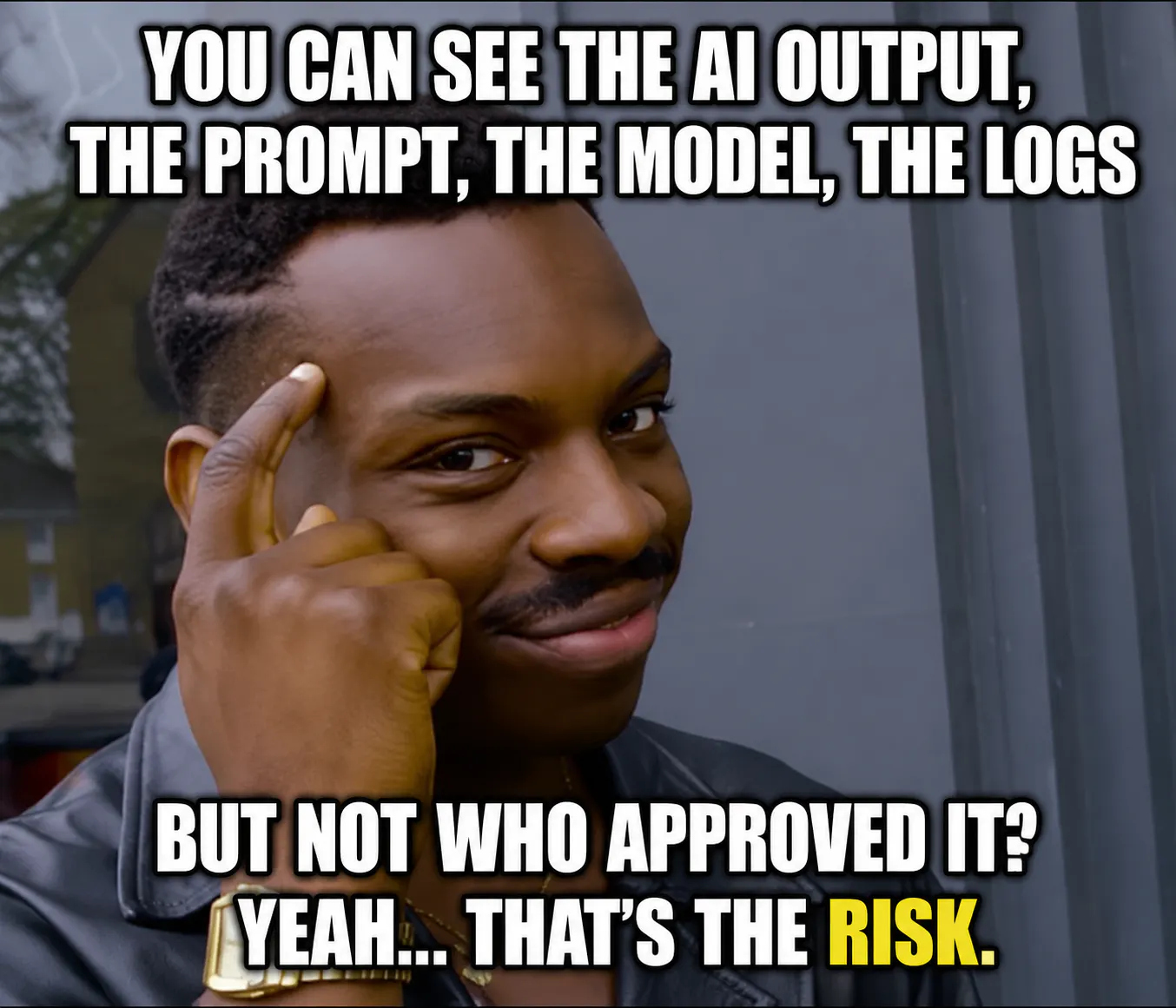
Been thinking about this after something that came up recently. Imagine an AI agent makes a recommendation that ends up influencing a customer workflow. The recommendation gets reviewed, approved, and eventually becomes part of how the team operates. Fast forward a few months and someone wants to understand why that decision was made. The interesting part is that the technical history is usually still available. You can find the output. You can find the prompt. You can usually figure out which model generated it. What can be surprisingly difficult to find is the human context around the decision. Who reviewed the recommendation? Who approved it? What information did they have that made the recommendation seem reasonable at the time? The more AI becomes part of everyday workflows, the more I find myself paying attention to that layer. Understanding the output matters, but understanding why someone trusted that output often matters just as much. A lot of conversations around AI accountability focus on the model. I suspect a lot of the missing context lives around the people making decisions with it. Curious how your team is keeping track of that today, lets discuss it below...
KodeGauge reveals what's in your code, how much it costs to run, and how to fix it. Identify technical debt, security risks, and infrastructure waste in minutes.