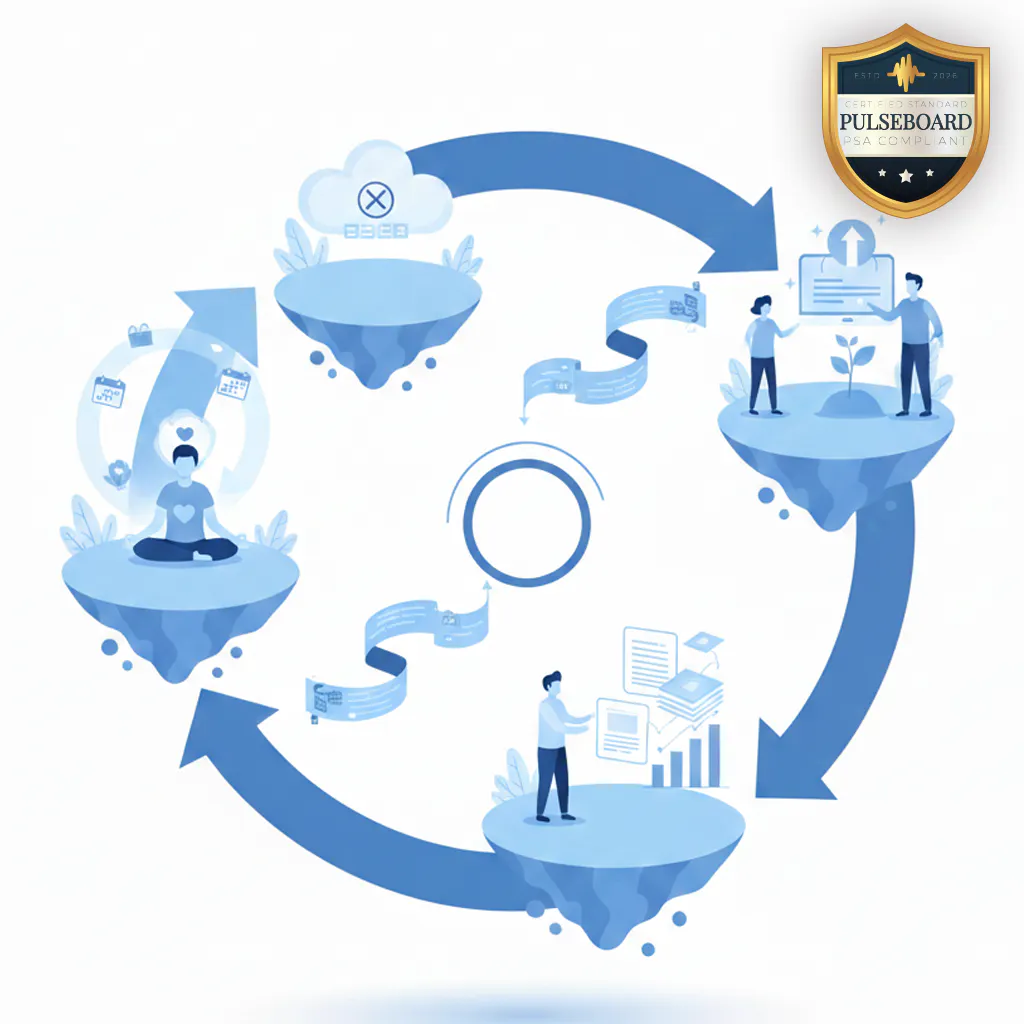
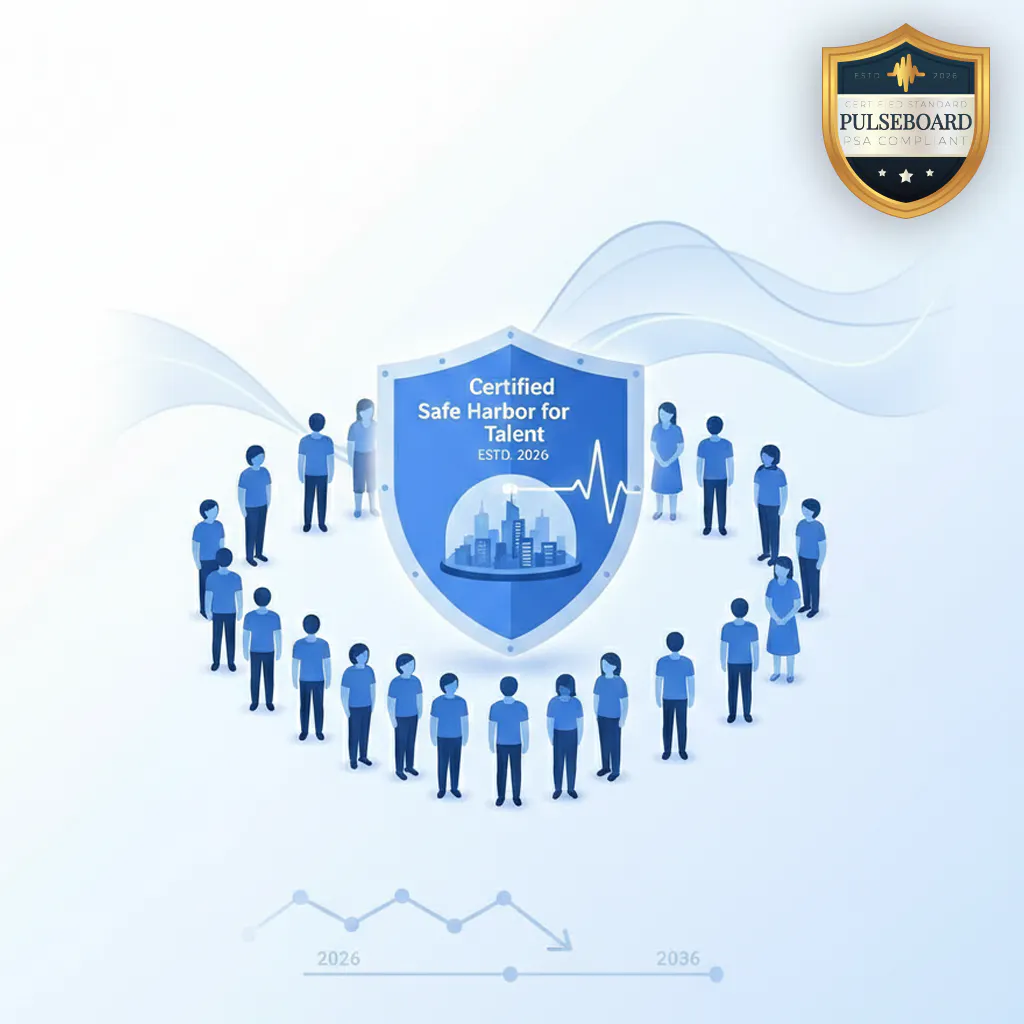
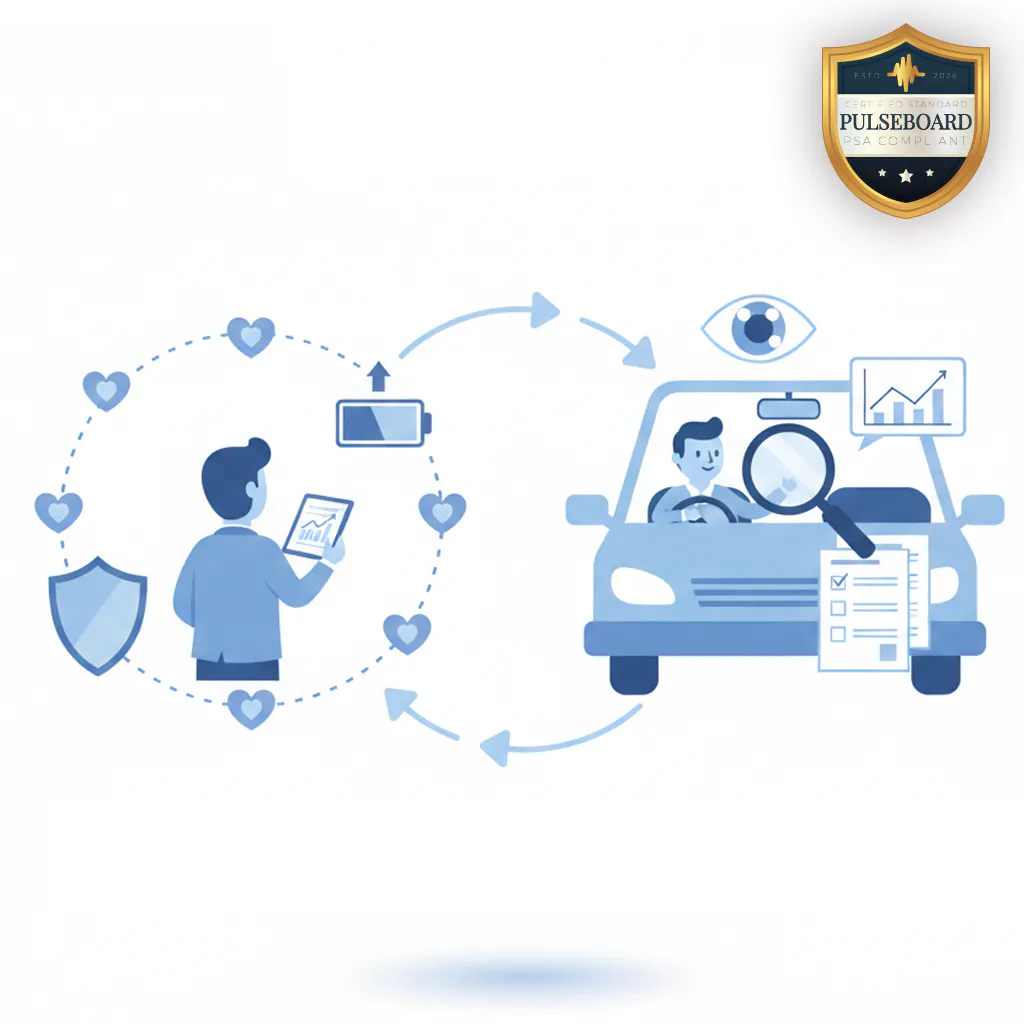
Preventative Organizational Architecture. We don't believe in managing burnout; we believe in making it impossible. PulseBoard is the 'Burnout Barrier' a preventative architecture built into the daily life of the company. By constantly monitoring the balance between AI Workload Intelligence and Energy Intelligence, we create a 'safety buffer' that prevents teams from ever entering the Red Zone. It s about building a fortress around your talent, so they can thrive without fear.
This is a great and big community. I want to make the world a little bit better with Pulseboard. Can we find together 50 companies, who wants to test this complete for free. See why it is healthy for you as a person and therefore for the team you are working ins and the whole company. Just 20 sec to checkin and say something about your mood, energy-level and workload. Just so simple.
For a CEO of a tech company, PSA compliance is often a 'black box'. PulseBoard turns that box into a clear dashboard. See your 'Standard 2026' certification status in real-time. Know that your AI Workload Intelligence is protecting your staff and your shareholders from the fallout of human error. Standard: Executive Oversight.
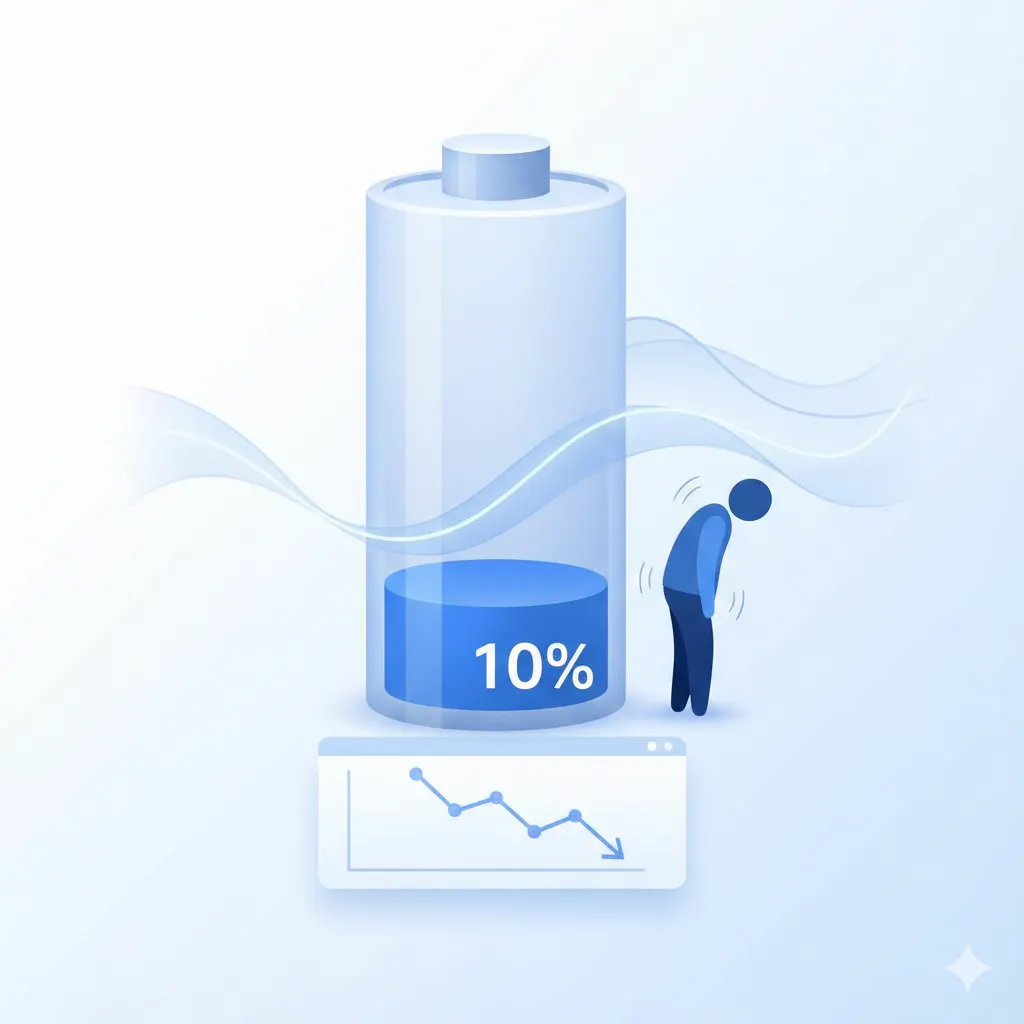
No one would dream of starting a long journey with a phone battery at 10% or an empty fuel tank. Yet, companies start massive, high-stakes projects with teams that are already exhausted. PulseBoard is the 'Battery Check' for your organization. Before you commit to a new milestone, our dashboard tells you if the team has the 'Energy Reserve' to finish it. We ensure you start every project with the power to win, not just the will to try.
Efficiency Intelligence & Overtime Mitigation. More hours do not equal more output. Our AI engine recognizes the point of diminishing returns: the moment when extra working hours lead to exponential fatigue and error margins. In the PulseBoard app, this is visible as an 'Efficiency Decay' alert. We do not use AI to make people work harder, but to intelligently signal when rest is the most productive action. This is how we translate the Working Conditions Act into a modern algorithm.
In a large organization, resilience isn't distributed evenly. Some teams bounce back from a crisis in days; others struggle for months. PulseBoard creates a 'Resilience Map' of your organization, identifying which departments have high 'Adaptive Capacity' and which are fragile. This allows HR to allocate resources and training where they are needed most, ensuring the entire organization grows stronger with every challenge.
PulseBoard is more than an app; it s a commitment to a standard. For tech companies, this means proving to clients that their data is being handled by a certified, 'Fit-for-Duty' team. It s a competitive advantage that says: "We are responsible, we are intelligent, and we are safe."
When data is transparent, trust grows. Our app facilitates a 'Culture of Candor' by discussing energy levels just as openly as revenue figures. Our AI validates honesty within the organization: if the AI detects a mismatch between reported pressure and actual energy output, it opens the way for a genuine conversation. We create an environment where 'not being okay' is a valuable data point for growth.
Data is often perceived as cold, but PulseBoard makes it human. Our AI acts as an 'Empathy Engine' that translates complex numbers into concrete needs. In the dashboard, a manager doesn't just see a score but receives AI-generated suggestions: "Team X experienced high pressure this week with low social support; schedule an informal check-in." We use AI to strengthen the human connection, not to replace it.
Fragmentatie is de grootste vijand van de kenniseconomie. Wanneer onze AI Workload Intelligence ziet dat een team te veel verschillende taken tegelijk moet verwerken, triggert de app een 'Fragmentation Alert'. Wij bieden geen statische lijstjes, maar een intelligent filter dat suggereert wanneer 'Deep Work' protocollen moeten worden geactiveerd. Zo beschermt onze applicatie de focus van uw team, wat direct bijdraagt aan de vermindering van mentale belasting (PSA).
Team Dynamics & Synergy Intelligence. Sometimes, individual energy levels are high, but the team's overall output is stalling. PulseBoard AI identifies the 'Synergy Gap' the friction point where communication or processes are draining the collective energy. By mapping these dynamics, we help leaders realign their teams, turning a group of high-performing individuals into a high-performing unit. It s about optimizing the 'we', not just the 'me.'
Work without energy is merely labor; work with energy is passion. Our application protects your organization's 'Purpose' by monitoring your people's energy. Our AI detects when passion is stifled by bureaucratic overload and sends timely signals to the top. We are the guardian of your mission, ensuring that the heart of your company your people keeps beating.
The greatest enemy of productivity is interruption. Traditional employee surveys are famous for breaking the 'Flow State.' PulseBoard was designed by neuroscientists to be the 'Flow State Guardian.' Our 20-second check-in is so fast and intuitive that it captures high-fidelity data without pulling the employee out of their deep work. We believe you shouldn't have to sacrifice productivity to measure well-being the two should support each other. Non-Intrusive Workflow Integration.
Sub-threshold Risk Detection. The most dangerous form of burnout isn't the loud explosion; it s the quiet withdrawal. It s the high-performer who slowly stops engaging, stops contributing, and loses their 'spark.' PulseBoard AI is trained to detect these subtle drops in 'Social Support' and 'Engagement' scores long before a human manager notices. We identify the 'Withdrawal Phase' early, giving you the chance to bring your best talent back from the edge before they disappear entirely.
Executive Governance & Assurance. A CEO s focus should be on vision and growth, not on the fear of unexpected Arbo-fines or a sudden exodus of talent due to toxic stress. PulseBoard provides Executive Assurance by turning 'Human Capital Risk' into a manageable data point on the executive dashboard. We automate the oversight of mental safety, ensuring that the CEO can walk into any boardroom or any inspection with the peace of mind that their house is in order.
Financial Validation of Human Capital. For too long, well-being has been seen as a 'soft' cost. PulseBoard changes the conversation by calculating the 'Energy ROI'. By correlating team energy levels with project velocity and error rates, we show CFOs the direct financial impact of a healthy workforce. When energy levels are high, ROI is high. We provide the hard data to prove that investing in the PulseBoard Standard is the most profitable decision a company can make.
Every team has a cognitive ceiling a point where more input leads to less output. When our AI detects a team hitting this limit, it flags a "Cognitive Load Alert." Instead of pushing for more hours, the system suggests a "Brain Break" or a "Meeting-Free Day." By managing the ceiling rather than the clock, we protect the team's ability to innovate, ensuring that your brightest minds aren't dimmed by preventable exhaustion.
Scientific Recovery Validation. In high-performance cultures, 'work' is the only metric that matters. But science tells us that performance is a function of recovery. PulseBoard s Energy Intelligence introduces the 'Recovery Validation' metric. It tracks if teams are actually recharging during off-hours or if they are carrying 'Residual Strain' into the next day. By validating recovery, we ensure that your high-performers stay high-performing, preventing the slow decay of productivity that leads to long-term illness.
Micro-Risk Detection. An engineer might think they are doing fine, but our AI sees the 'Micro-slumps' in their energy data that correlate with increased error rates. PulseBoard provides a silent warning to the manager: "Risk of error increasing in Team B." It s the ultimate early-warning system for the digital age.
Energy-Driven Security Governance. Security officers focus on firewalls but often forget 'Energy Intelligence'. A tired sysadmin who misconfigures a cloud setting is your biggest leak. Our app integrates mental energy as a security metric in your dashboard. We prove that a fit team is your best defense against accidental data exposure and unauthorized access.