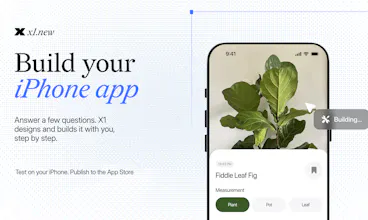
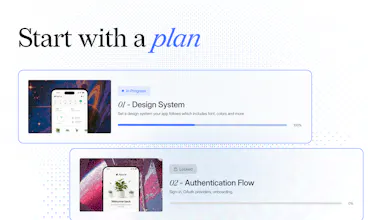
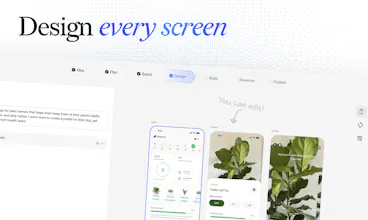
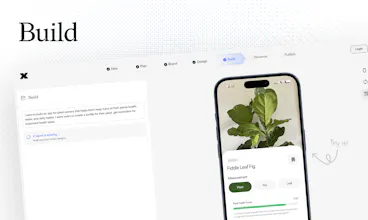
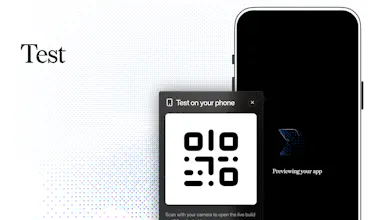
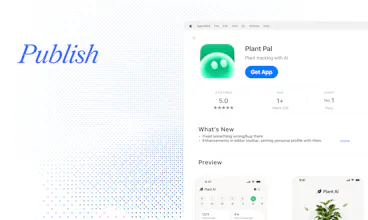
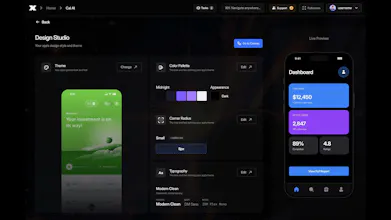
X1 is an AI app builder that takes you from an idea to an iPhone app you can publish on the App Store. Instead of trying to generate the entire app from one prompt, X1 guides you step by step. It asks focused questions, designs each screen for you to review and edit, then builds the app in stages. Preview and test it on your iPhone as you go. When it’s ready, X1 prepares your App Store listing, screenshots, and submission. No coding required.
@rivendell_chorro Thanks! 🙏 The ones that really push it are the apps doing heavy lifting on the device itself, like a sports app that takes an uploaded video and runs detection on it, tracking every joint frame by frame to break down someone's mechanics.
Or the live ones, think a fleet platform pulling real time GPS off a bunch of drivers, optimizing routes across dozens of stops and firing geofence alerts as vehicles move. That stuff stacks a lot of hard problems into one app, on device vision or live data, a real processing pipeline, and a web of integrations behind it that all has to stay in sync and still feel seamless to the user.
Getting those to come together through the step by step build instead of one giant prompt has been easily the most satisfying part so far 💪
Report
Congrats @manil_lakabi1 How's it different from Rork in practice? Both promise real iOS apps without code.
@boyuan_deng1 Yeah, surface level the promise is similar. The biggest difference is how X1 thinks about building the app.
We try to emulate how a strong product team actually works: figure out what should happen, make the product decisions, design the screens, build that piece, test it, then move on.
AI accelerates each of those steps instead of pretending they can disappear.
So rather than “describe your whole app and hope the model gets it right,” X1 works through it with you piece by piece and keeps those decisions connected as the product evolves.
That’s really the bet: AI should compress the product development process, not remove it.
Report
I like that you are asking for brutal feedback! what kind of feedback has surprised you most during development?
@james_carter35 Well there hasn't been much pushback on this new way of building an AI builder, most people are genuinely intrigued by the more controlled approach.
But honestly, during early development the thing that surprised me most was how much people pivot mid build. I kind of assumed folks would come in with a fixed idea and follow it through, but what actually happens is they get a few milestones in, see it running on their phone, and go "actually, no, let me change this core thing." and at one point it was frustrating to see people start with building an e-commerce system and pivot to a live streaming app for some reason (it still triggers a form of PTSD when I remember dealing with that lol) At first that felt like worst case.
But it's really a byproduct of the thing X1 is actually built around, which is keeping all the context of your app present without it eating up or plaguing your future decisions. Once that context holds, a pivot stops being scary, because changing one core thing updates what depends on it instead of quietly breaking the rest of the app. So it reframed how much that foundation matters.
Quick question: How does this compete with Rork? https://rork.com and glaze by raycast https://www.glaze.app/ ? how do you differentiate? or a better question whats better or different with x1?
@conduit_design Glaze is a bit different since it’s focused on Mac apps. Rork is the closer comparison.
The easiest analogy is building a house.
Rork is more like telling a really fast construction crew, “Build me a 6-bedroom house,” and they start building.
X1 first asks who’s living there, where the bedrooms should go, what matters to you, etc. Then it makes one blueprint and builds the house piece by piece against that blueprint.
Both can build the house. Our bet is that the blueprint + process matter a lot once you start changing things.
If you move a bedroom later, X1 should understand that the plumbing, hallway, electrical, etc. might need to change too instead of just moving one wall.
Report
Congrats on the Launch! I know from building mobile apps that the biggest return on your build comes from the iOS app users. Is this why you chose to focus on iOS only?
iOS users just tend to monetize much better, and we care a lot about whether the apps people build with X1 can actually become real businesses, not just demos.
The other reason is focus. We’d rather get one platform really right, from design → build → testing → App Store, than be mediocre across everything.
Report
could X1 take an existing app idea and help redesign the entire user experience from scratch?
@croft_benjamin yep for sure, X1 actually starts with an idea phase built specifically for this. It's made to talk through the core workflows and the important decisions behind your idea before anything gets designed. It asks you questions and you can have a real back and forth on any of the requirements, so you're mapping out the user experience together instead of X1 just guessing or taking the idea at face value.
By the time it moves into designing screens, the whole flow is already thought through with you. also since it keeps the decisions behind your app connected, reworking one part updates the stuff that depends on it instead of leaving you with a half redesigned app. All of it actually holds together as you change things.
Report
Could i describe an app in plain English and have X1 turn that into a complete screen by screen product plan?
@carter_garcia yep, that's basically the starting point. You describe the app in plain English and X1 turns it into a full plan for the whole product. Rather than a screen by screen plan, a better way to describe it would be a milestone by milestone plan.
It'll ask you a few focused questions along the way to catch anything ambiguous, then you get a plan you can actually review and tweak before a single screen gets built, so you're never guessing what it's about to make. Once you're happy with what your breakdown looks like, then you can start building out each screen or milestone.
And if you want to pivot, you can update the plan anytime and X1 regenerates the breakdown for you, keeping what's still needed and reordering things around your change instead of starting over.
Congrats! 👏 quick question : What was the hardest type of app you’ve built with X1 so far?
x1
@rivendell_chorro Thanks! 🙏 The ones that really push it are the apps doing heavy lifting on the device itself, like a sports app that takes an uploaded video and runs detection on it, tracking every joint frame by frame to break down someone's mechanics.
Or the live ones, think a fleet platform pulling real time GPS off a bunch of drivers, optimizing routes across dozens of stops and firing geofence alerts as vehicles move. That stuff stacks a lot of hard problems into one app, on device vision or live data, a real processing pipeline, and a web of integrations behind it that all has to stay in sync and still feel seamless to the user.
Getting those to come together through the step by step build instead of one giant prompt has been easily the most satisfying part so far 💪
Congrats @manil_lakabi1 How's it different from Rork in practice? Both promise real iOS apps without code.
x1
@boyuan_deng1 Yeah, surface level the promise is similar. The biggest difference is how X1 thinks about building the app.
We try to emulate how a strong product team actually works: figure out what should happen, make the product decisions, design the screens, build that piece, test it, then move on.
AI accelerates each of those steps instead of pretending they can disappear.
So rather than “describe your whole app and hope the model gets it right,” X1 works through it with you piece by piece and keeps those decisions connected as the product evolves.
That’s really the bet: AI should compress the product development process, not remove it.
I like that you are asking for brutal feedback! what kind of feedback has surprised you most during development?
x1
@james_carter35 Well there hasn't been much pushback on this new way of building an AI builder, most people are genuinely intrigued by the more controlled approach.
But honestly, during early development the thing that surprised me most was how much people pivot mid build. I kind of assumed folks would come in with a fixed idea and follow it through, but what actually happens is they get a few milestones in, see it running on their phone, and go "actually, no, let me change this core thing." and at one point it was frustrating to see people start with building an e-commerce system and pivot to a live streaming app for some reason (it still triggers a form of PTSD when I remember dealing with that lol) At first that felt like worst case.
But it's really a byproduct of the thing X1 is actually built around, which is keeping all the context of your app present without it eating up or plaguing your future decisions. Once that context holds, a pivot stops being scary, because changing one core thing updates what depends on it instead of quietly breaking the rest of the app. So it reframed how much that foundation matters.
DiffSense
Quick question: How does this compete with Rork? https://rork.com and glaze by raycast https://www.glaze.app/ ? how do you differentiate? or a better question whats better or different with x1?
x1
@conduit_design Glaze is a bit different since it’s focused on Mac apps. Rork is the closer comparison.
The easiest analogy is building a house.
Rork is more like telling a really fast construction crew, “Build me a 6-bedroom house,” and they start building.
X1 first asks who’s living there, where the bedrooms should go, what matters to you, etc. Then it makes one blueprint and builds the house piece by piece against that blueprint.
Both can build the house. Our bet is that the blueprint + process matter a lot once you start changing things.
If you move a bedroom later, X1 should understand that the plumbing, hallway, electrical, etc. might need to change too instead of just moving one wall.
Congrats on the Launch! I know from building mobile apps that the biggest return on your build comes from the iOS app users. Is this why you chose to focus on iOS only?
x1
@overpath_eoin Yeah, that’s a big part of it.
iOS users just tend to monetize much better, and we care a lot about whether the apps people build with X1 can actually become real businesses, not just demos.
The other reason is focus. We’d rather get one platform really right, from design → build → testing → App Store, than be mediocre across everything.
could X1 take an existing app idea and help redesign the entire user experience from scratch?
x1
@croft_benjamin
yep for sure, X1 actually starts with an idea phase built specifically for this. It's made to talk through the core workflows and the important decisions behind your idea before anything gets designed. It asks you questions and you can have a real back and forth on any of the requirements, so you're mapping out the user experience together instead of X1 just guessing or taking the idea at face value.
By the time it moves into designing screens, the whole flow is already thought through with you. also since it keeps the decisions behind your app connected, reworking one part updates the stuff that depends on it instead of leaving you with a half redesigned app. All of it actually holds together as you change things.
Could i describe an app in plain English and have X1 turn that into a complete screen by screen product plan?
x1
@carter_garcia yep, that's basically the starting point. You describe the app in plain English and X1 turns it into a full plan for the whole product. Rather than a screen by screen plan, a better way to describe it would be a milestone by milestone plan.
It'll ask you a few focused questions along the way to catch anything ambiguous, then you get a plan you can actually review and tweak before a single screen gets built, so you're never guessing what it's about to make. Once you're happy with what your breakdown looks like, then you can start building out each screen or milestone.
And if you want to pivot, you can update the plan anytime and X1 regenerates the breakdown for you, keeping what's still needed and reordering things around your change instead of starting over.