Stop making cards. Dump the words, phrases, and grammar you meet. Wortel structures them, connects them, and grows them into permanent memory by making you use them.

No reviews yetBe the first to leave a review for Wortel
Maker
📌
Hey all,
I built Wortel because every language learning app taught me their own words but never the ones I actually run into during comprehensible input.
You read an article, watch a show, have a conversation, and hit a word you don't know. You look it up, feel good, and forget it a week later.
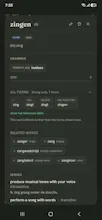
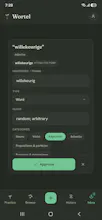
Wortel is a second brain for the language you're learning. You capture the words and phrases you actually meet, and it does the rest: structures each one (meaning, forms, examples, grammar), files it into your personal knowledge base, then drills you on exactly what you're weakest at, in the way most likely to make it stick.
A few things I cared about building it:
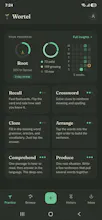
1. It targets your gaps. Every session mixes what you're solid on with what you're struggling with, so you're always consolidating and stretching, never grinding random flashcards.
2. Recognition ≠ production. Knowing a word when you see it and being able to actually use it are different skills. Wortel tracks them separately and pushes you toward producing the language.
3. Nothing fake. It teaches a language, so a made-up word or a wrong conjugation is worse than showing nothing. A second, stronger model reviews every AI generation and drops anything that doesn't hold up.
4. Six ways to practice (recall, cloze, arrange, crossword, comprehension, free production), audio-first listening, language agnostic, on web and Android and iOS (not published yet though, looking for more feedback).
Under the hood of the knowledge retention engine, it's using an established learning science architecture:
- Spaced repetition, scheduled per word by FSRS: the spacing effect (Cepeda et al., 2006)
- Retrieval practice: every exercise is active recall, not review: the testing effect (Roediger & Karpicke, 2006)
- Desirable difficulty + interleaving in that ~70/30 mix (Bjork, 1994): tuned to keep you near an ~85% success rate (Wilson et al., 2019)
- Production over recognition: the generation effect (Slamecka & Graf, 1978)
I'd genuinely love feedback from fellow learners. Questions and constructive criticism is welcome!