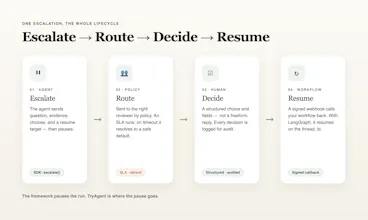
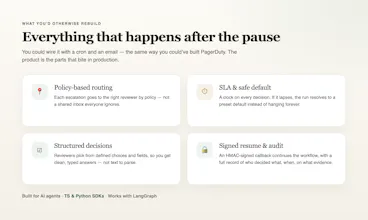
AI agents now handle real work like refunds, writes, and approvals, but sometimes they hit a decision they shouldn't make alone. LangGraph can pause the run; the hard part is everything after. TryAgent is the incident-response layer for those moments. Your agent sends one escalation. TryAgent routes it by policy to the right human, runs an SLA with a safe-default fallback, captures a structured decision, logs an audit trail, and resumes your run via signed webhook. TS + Python SDKs.
No reviews yetBe the first to leave a review for TryAgent
Framer AI AgentsDesign and publish professional sites with AI
Promoted
Maker
📌
Hey Product Hunt 👋
I built TryAgent after wiring the same flow into a couple of agents: the agent
hits something it shouldn't decide alone, and you need a human in the loop — fast,
to the right person, with a record.
Pausing the agent turned out to be the easy 10%. The other 90% was the operations
around the pause: routing to the right reviewer, an SLA so it doesn't hang
forever, a safe default when no one answers, capturing a clean structured decision
instead of a freeform reply, and an audit trail compliance would actually accept.
Then handing the decision back to the workflow so the run continues.
So TryAgent is that layer — think incident response / on-call, but for the
decisions AI agents escalate. It drops into a LangGraph interrupt, and ships TS +
Python SDKs.
Would genuinely love feedback on the routing + timeout model. What does
"escalate to a human" look like in your agents today?