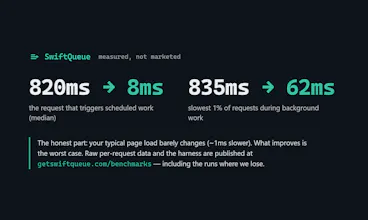
WordPress runs scheduled work—emails, backups, publishing—during a visitor's page load. SwiftQueue moves it to a real background worker. What's different: we publish measured benchmarks with the raw data (the request that triggers cron: 820ms -> 8ms; worst 1% during background work: 835ms -> 62ms). We tell small sites they don't need it. The free core is the whole engine, not a trial. Pro adds WooCommerce checkout protection, priority lanes, alerts, and multisite.
Viktor.comAn AI coworker that actually does the work
Promoted
Maker
📌
Hey Product Hunt! Maker here.
I built SwiftQueue after learning something that genuinely surprised me: by default, WordPress does its scheduled chores — sending emails, running backups, publishing scheduled posts — during a visitor's page load. Some unlucky visitor stands at the till while the shop does its bookkeeping. On a WooCommerce store, that visitor is sometimes the person paying you.
SwiftQueue hands that work to a background worker instead. The visitor gets their page; the chores still happen.
Two things I decided early and stuck to:
Every number we publish is measured, and the raw per-request data ships with it. The benchmarks page leads with the unflattering result — your typical page load barely changes (it's ~1ms slower, actually). What improves is the worst case: the slowest 1% of requests during background work went from 835ms to 62ms in our published run. If a number can't be reproduced, we don't publish it.
The site tells you when NOT to buy. A small hobby site with a few plugins genuinely doesn't need this, and the homepage says so. The free core is the entire background engine under GPL — not a trial, not nagware.
You can watch real background workers firing on the live demo right now, or spin up a full WordPress with SwiftQueue in your browser in one click — no install, no signup: https://getswiftqueue.com/demo
I'd love honest feedback, especially from anyone running a store or managing client sites. And if you think the benchmark methodology has a hole in it, tell me — that page exists to be argued with.