
specs.md by fabriqa.ai
spec-driven AI development with pluggable flows
55 followers
spec-driven AI development with pluggable flows
55 followers
A framework for spec-driven AI development with pluggable flows by fabriqa.ai

Free
Launch Team

Viktor.comAn AI coworker that actually does the work
Promoted
Hey Product Hunt! 👋
We’re entering the era of AI-assisted coding, but there’s a massive bottleneck: Context. I built Specs.md because I noticed that AI agents (like Cursor, Windsurf, or Claude Code) perform 10x better when they have clear, structured instructions—not just a messy codebase. Most documentation is "dead" the moment it’s written. I wanted to make it living.
Specs.md is an open-source implementation of the AI-DLC (AI-Driven Development Lifecycle). It moves beyond "vibe-coding" by creating a structured flow between human intent and AI execution.
What makes it different?
🧩 AI-DLC Framework: Implements a modern methodology for AI-native development (Inception → Construction → Operations).
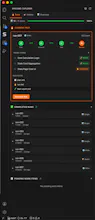
🔌 VS Code Extension: A dedicated sidebar that tracks your progress through intents, stories, and "bolts" in real-time. No more jumping between terminals and markdown files.
🤖 AI-Ready: Our "Memory Bank" structure provides LLMs with the precise semantic context they need to stop hallucinating.
📄 Markdown-first: Everything lives in your repo, versioned alongside your code.
Vs. Spec Kit/BMAD: While those are great CLI-first tools, Specs.md adds a visual layer via our VS Code extension to track "living" state and progress.
Check out our full comparison here: https://specs.md/compare/overview
I am excited to see how you use it to build your next big thing. I'd love to hear from you: How are you managing context for your AI coding tools right now?
Let us know what you think in the comments! 🚀
I added a new flow inspired by AIDLC implementation of specs.md but introduced adaptive execution modes depending on the complexity of the task, removed the concept of pre-planned bolts, introduced "runs" those are essentially decided by AI, what to run next, how to batch them etc. this way it removes the rigidity of the system and enables you to change and evolve your backlog of intents freely without thinking about bolts that are already planned. I also removed the concept of units, and renamed stories to workitems, so we now have Intents and they break down to workitems, when you run a "builder" agent it look up what is pending and suggest you a list "run" basaed on your choice (when you init your project) and complextiy of each workitem and their dependencies.
It is FIRE.🔥
https://specs.md/fire-flow/overview
another news. I started recording videos for specs.md usage this week.
here is a 35 mins video from strach showing how to build a "mixpanel dashboard for my personal usage"
https://specs.md/learn/fire-flow-intro
https://specs.md/learn (there are two videos about AIDLC executions here, one of them is just is speed of version of the other. it is showing how to interact with agent and execute, now full flow)
I am terrible at voice over but I will figure it out, until then there is no sound, rock on your with your favorite playlist. 🤘
I also set up an automation to post specs.md changelog to it's own twitter account. https://x.com/specsmd
new vscode extension feature for FIRE flow 🔥
https://x.com/hancengiz/status/2015002338537197888