Launched this week

Sonarish
sona, sonarish, sound, local, dsp
5 followers
sona, sonarish, sound, local, dsp
5 followers
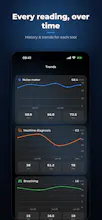
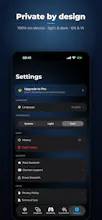
Most sound apps are a free dB readout full of ads or a cloud mic that uploads your audio. Sonarish is four acoustic instruments running 100% on-device — the audio pipeline has no internet permission, so it can't upload. Standouts: phone-as-sonar breathing from an inaudible ~19 kHz tone, machine-fault screening (envelope spectrum + spectral kurtosis) normally locked in $2k analyzers, and a calibrated dB(A) meter with timestamped PDF/CSV reports. Hand-written C++ DSP core, native iOS + Android.



How well does the 19 kHz sonar tone actually hold up outdoors with traffic and wind noise, and is there any clue in the app about the effective range before it gets drowned out?
@abanmantc181w Great question — it gets right at where we've deliberately drawn the product boundary.
The current build is tuned as a near-field indoor vitals sensor. The sweet spot is the phone within about a meter, which is exactly our beachhead: bedside, crib, desk — sleep and breathing monitoring, baby and elder care. In that envelope it's reliable, and it's fully on-device, contactless, and private, which is the hard-to-copy part.
On noise specifically, the physics work in our favor more than people expect. Traffic and wind are almost entirely low-frequency energy, while we sense up at 19 kHz and filter everything below it — so ambient environmental noise largely falls outside the band we listen to. The real constraint at range isn't the noise floor, it's the SNR of the reflection and scene motion. That's an engineering problem, not a wall.
The path to extend range and go into harsher environments is well-understood acoustic-sensing territory, and none of it needs new hardware: moving from a single continuous tone to coded chirps / FMCW gives us range-gating and matched-filter processing gain (the same trick radar uses to pull a target out of noise); adaptive clutter cancellation replaces today's static-scene assumption; and fusing the IMU plus multi-mic beamforming lets us reject phone motion and steer around noise sources. It's all DSP on the sensor stack we already ship.
And we already surface an honest confidence signal — a live Signal Quality Index — so the app knows, and tells the user, when a reading is trustworthy. That's both a UX safeguard and a data asset: we can label exactly the conditions where the sensor is confident, which is what lets us expand the envelope safely instead of overclaiming.