
ScenarioMock
Stateful Mock API server you can share with a single URL
7 followers
Stateful Mock API server you can share with a single URL
7 followers
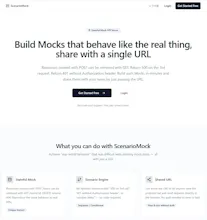
ScenarioMock lets you build mock API servers that actually behave like real ones. POST /users creates a resource. GET /users/:id retrieves it. DELETE returns 404. Return 500 on the 3rd request. Return 401 without an Authorization header. Set up these behaviors in a GUI — no code needed. Share the URL and your team can test immediately, no auth required.

Free Options
Launch Team

LightfieldAI-native CRM that builds itself and does work for you
Promoted
Hey Product Hunt! 👋 I'm Yoshi, the maker of ScenarioMock.
I built this because I kept running into the same frustration: existing mock tools return fixed responses. Real APIs have state. When I POST /users, I expect GET /users/:id to return that user. When I hit a rate limit on the 3rd request, I expect a 429. Mocking these flows was always painful — until now.
What ScenarioMock does differently:
🗄️ Stateful Mock — Resources created with POST can be retrieved with GET. DELETE returns 404. It behaves like a real database-backed API, powered by Redis.
🎭 Scenario Engine — Set dynamic behaviors without writing code:
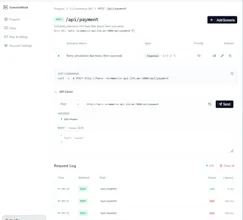
- Sequence: "Return 200 on the 1st call, 429 on the 2nd, 200 again from the 3rd"
- Conditional: "Return 401 if the Authorization header is missing"
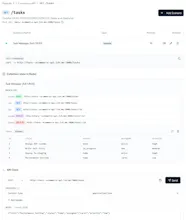
- Stateful Collection: Full CRUD mock in one config
🔗 Shared URL — Make your project public and share the URL. Anyone can view the endpoint list and send requests directly in the browser — no account needed.
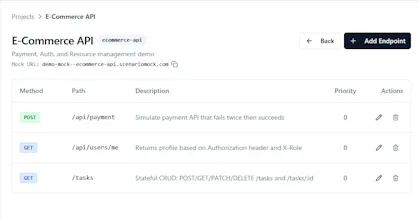
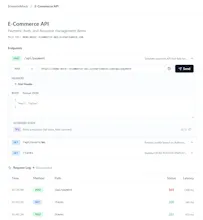
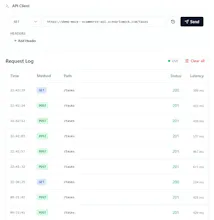
Here's a live example you can try right now, no signup required: https://scenariomock.com/shared/demo-mock--ecommerce-api
And for mobile API testing, I also have a companion Android app: [API Tester – REST & JSON Client](https://play.google.com/store/apps/details?id=com.toolbox.m.mobile_api_tester). Build the mock on ScenarioMock, fire requests from your phone.
I'd love to hear what you think — feedback on which scenario type you'd use most, or features you wish mock tools had. Happy to answer any questions below! 🙏
Shipped: endpoints can now document themselves 📝
Here's the problem I kept hitting: I'd share a public project URL, someone
would open an endpoint that branches on a header (like `X-Role: admin`),
and they'd just... hit Send with no headers set. They'd get the default
response, assume the mock was broken, and move on.
They had no way of knowing the endpoint even looked at that header.
Now you can document each header / query param / path param with a
description AND an example value — and that example value auto-fills the
built-in API client. Visitors open the endpoint, see a request that's
already set up sensibly, hit Send, and immediately see the scenario in
action instead of guessing.
You can also document expected error responses ("this returns 401 if
Authorization is missing") so the behavior is explained right next to
where people test it.
Try it on the role-based access endpoint in the live demo — headers are
pre-filled, just hit Send:
https://scenariomock.com/shared/demo-mock--ecommerce-api
If you're sharing a mock with your team, this is the feature I'd
recommend setting up first — it turns "here's a URL, good luck" into
something people can actually understand without asking you questions.
Quick update — a few people asked "can I try it before signing up?"
Yes! Here's a live shared project you can poke at right now, no account needed:
https://scenariomock.com/shared/demo-mock--ecommerce-api
It's a mock e-commerce API with stateful CRUD (POST creates a product, GET
retrieves it, DELETE removes it) plus a couple of Sequence/Conditional
scenarios wired up. Try hitting the endpoints directly from the page and let
me know what you think 🙏
Hi everyone! Thank you all so much for the amazing support and Upvotes today! 🙏
We just launched ScenarioMock to help API learning and development.
Please feel free to drop any questions or feedback in the comments.
We'd love to hear from you!