
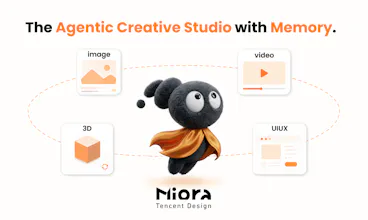
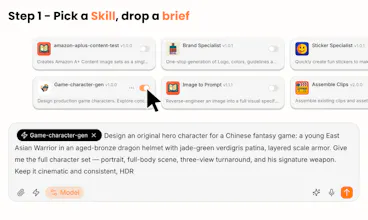
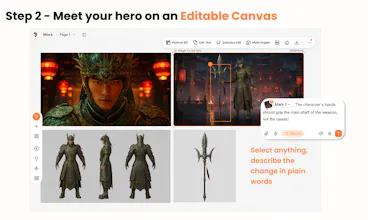
Not another AI image tool. Miora is an Agentic Creative Studio with Memory. Bring one idea, generate multimodal assets on one editable canvas, turn auto-built memory into a reusable Skill, then create more, always true to your taste. One person, a whole creative studio.


Free Options
Launch Team

EneyProactive AI for Mac. Free test, 20,000 credits.
Promoted
How do you plan to handle copyright and ownership issues with user-generated assets and skills created on Miora's platform?
@aymnart Great question. Our principle is simple: users should own the assets they create and control the Skills they build.
Skills in Miora are treated like user-created creative systems: prompts, rules, references, brand guidelines, memory, and workflow logic. They’re private by default, and users should decide whether to reuse, share, export, or delete them.
For copyright, we’re working on clear ownership terms, reference controls, provenance where possible, and safeguards against intentionally copying protected assets or characters.
@aymnart This is a fantastic and crucial question, Aymen. Our stance is very straightforward: you own what you create. Any visual assets you generate and any custom skills or memory rules you build on Miora belong entirely to you. We know that for agencies and studios, IP is everything. We do not claim ownership over your proprietary brand guidelines, nor do we use your private workspace data or specific anchor nodes to train our models. While global copyright laws regarding AI are still evolving, Miora is built from the ground up to be a secure environment that gives you full commercial rights and complete ownership over your specific creative workflows.
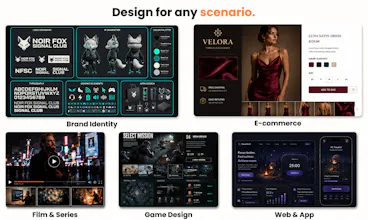
Creative consistency is usually lost in the handoffs: key visual to motion, motion to social, social to product UI. Putting those assets on one canvas with shared memory could remove a lot of repeated explanation.
@mingyouagi Exactly, and it is more than putting the assets on one canvas. Miora’s agent sees the work in one shared context, so it can follow the connection from a key visual to motion, social, and UI without making you re-explain the brief every time.
Project memory carries the important context across new conversations too, such as your logo, brand rules, and key decisions. That continuity is where the handoffs start to feel much less painful.
@mingyouagi and memory is just the one of many exciting features coming to Miora. We’re rethinking creative generation around a true Agent, with the goal of transforming how people create while dramatically lowering the barrier to entry. Much more is coming.
when you share a Skill with a teammate, does the anchor/memory baked into it travel with it, or does it need re-anchoring against their own account's memory first?
@sabber_ahamed That is a great technical question! To clarify, a Skill in Miora operates much like skills in other AI agent products—it is completely stateless. The baked memory and specific anchor nodes do not travel with it. Instead, a Skill is designed to summarize your process and capture your workflow, essentially acting as a SOP. When you share it with a teammate, you are sharing the exact recipe, which they will then apply to their own specific anchors and canvas memory.
@ziofat that's a clean way to frame it, recipe not the data. does the teammate get any signal for how close their re-anchored version lands to your original intent, or is that entirely on them to judge?
@sabber_ahamed Right now, there isn't an automated similarity score or a rigid system signal that grades their output against your original intent. Because they are applying your recipe to their own unique anchors, "intent" becomes highly contextual. We believe that visual judgment on the open canvas is still the most reliable way to gauge that. They run the recipe, see the results side-by-side with their references, and use their own creative eye for that final alignment.
@ziofat @sabber_ahamed Miora is an agent, so it does more than hand over a recipe and leave the judgment to your teammate. It can compare their new anchors against the Skill’s original intent, point out where it sees drift, and talk through whether that shift is intentional or needs to be corrected.
The shared Skill carries the recipe and its criteria, while each person’s own context stays private. Curious how you’d want this to work in practice. Any ideas?
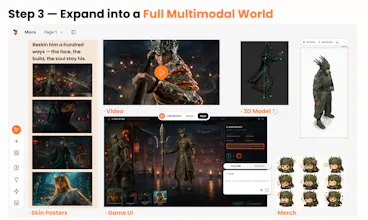
the anchor-node consistency answer is genuinely thoughtful. more of a business-model question: a full multimodal campaign pack (script, storyboard, video, UI, 3D) across several specialist agents sounds credit-heavy. does the 1,000 free credits cover one real end-to-end campaign, or is that more of a taste-test amount before you hit a paywall mid-project?
@galdayan Great question.
The goal isn't to get creators halfway through a project and then surprise them with a paywall.
How far 1,000 credits goes depends a lot on the workflow. A quick visual exploration uses very little, while a full multimodal campaign naturally consumes more.
But our intention is that people can experience a real end-to-end creative workflow, not just a taste test of one
@sherina_chen fair enough, I know that's a hard number to promise upfront since every brief is different. guess I'll just have to burn through the credits myself and see where it actually lands.
The project-vs-personal memory split is what sells this for me — as an indie dev I'm always making promo art and covers for my own app, and the visual language has to stay consistent, which black-box "AI remembers your taste" tools always drift on. Saving that as an editable Skill I reuse per project is the part I'd actually use. When you share a Skill, does it carry its memory rules with it, or just the workflow steps?
@lennoxbeflying You are exactly the kind of creator we had in mind when we split project memory from personal memory.
The idea is that a shared Skill carries the workflow and the intent behind it, while each creator still brings their own context and references into the project.
So if your Skill says "keep the playful illustration style, the soft gradients, and the visual language from Project X", those rules travel with the Skill. The personal history behind why you like those choices stays yours.
We like to think of it as sharing the recipe and the taste profile, not your entire kitchen.
Memory is the most interesting part to me. Can users see why a particular memory was recalled for a generation and remove it from that run without deleting it permanently?
@s_cen In Miora, memory isn't hidden away in a black box. We separate personal memory from project memory, and both are visible and editable by the user.
You can also turn memory off entirely when you want to work from a clean slate.
The "why was this memory recalled for this generation?" part is a fascinating direction though. The moment AI starts having memory, it probably also needs receipts.
Agent memory is a real game changer. Is it the case that your brand memories are saved as vector embeddings attached to user profiles? Can your group share their style memories?
@saksham_salvi We actually think of it less as "a vector attached to a profile" and more as a memory graph that evolves over time.
That's also why we separate personal memory from project memory. Some things belong to the creator, while others belong to the work itself.
As for shared style memories across a team, we don't support that today, but it's a direction we're actively thinking about.
@sherina_chen This makes things clearer now. The distinction between personal and project memory seems to be the way forward. I can see how collective memories of projects would really come in handy for design agencies.