
InstaHost
Run projects on your own PC and never again pay for hosting
12 followers
Run projects on your own PC and never again pay for hosting
12 followers
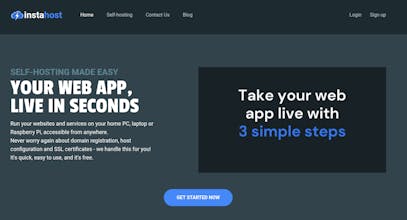
Self-hosting means running your website, app, blog or service on your own infrastructure, such as a home PC, laptop, or Raspberry Pi. It also allows to connect to your home computer with remote desktop, access private files, or run a game server on a laptop.




Obzrv.it
Obzrv.it
@masump great question, thanks. This is thanks to SSH (Secure SHell) - a standard program available on every computer / OS nowadays, for secure communication. It is run with "-R" option which means it is only used for secure, encrypted port forwarding - it's not possible to execute a command on a remote computer what otherwise SSH normally allows - so that all traffic from the Internet-reachable machine is forwarded to any computer you want, like a home PC or a Raspberry Pi connected via mobile network.
This looks amazing! A few questions:
How easy is it to set up for someone with limited technical knowledge?
Does it support cross-platform access (e.g., connecting from a phone to a PC)?
What kind of security features are built-in to protect self-hosted services?
Great work—this could really empower users to take control of their data! 👏
Obzrv.it
@fiona_bao
Hi!
It's fairly easy as instructions are displayed on the screen, and all user has to do is copy & paste a command
You can connect any device, from Android phone to home laptop, to our server to make a service running there accessible on the Internet
Data is encrypted with SSL when flowing between our server and your device
Thanks and good luck with Lushair!