
HealthResearch.pro
There may be options you've never heard of.
4 followers
There may be options you've never heard of.
4 followers
Have you ever asked yourself: is this really all there is? How is this treated in the rest of the world? What your doctor offers is often what your doctor knows. But a diagnosis is treated differently across the world - in conventional and traditional medicine, in a many of languages. This report finds treatment options documented worldwide for your diagnosis and traces each one back to its source, so you and your doctor can see the full picture. Closed beta: DM me (limited spots)

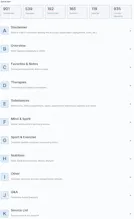

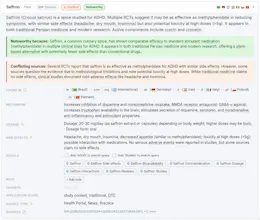


I built this because nothing out there gave me a complete overview of the available options for a given disease or health topic. The ADHD hyperfocus helped a lot to finish this :D
There are 10 free reports on the website available: https://healthresearch.pro/
Still early, so any feedback is hugely welcome - tell me what's useful and what's missing.
Dealing with a longer-term health topic and just want more options to explore? Let me know - closed beta available for a limited number of people (includes a free custom report on your topic).
Love the idea of tracing treatments back to sources, that source transparency is huge. One thing that would really help: let users filter or sort by study type like randomized trials vs case reports vs traditional texts, so the evidence strength is easier to gauge at a glance.
@altmelis74860 Thanks, and totally agree that source transparency is the core of it.
We actually had exactly this in an earlier version, filtering and sorting by study type. The problem is more fundamental than it looks: to classify something as an RCT vs a case report vs a traditional text, you'd have to reliably know what a source actually is. But all we have per source is the crawled text and its link. A page can claim "a randomized trial showed…", yet from the text alone there's no reliable way to tell whether that's the actual study, someone loosely referencing it, or simply an opinion citing it wrong. So any evidence-type label would be a guess, not a fact.
On top of that, I can't (yet) verify every "there's a study on this" claim by tracing it back to the actual study, because access to studies isn't the same in every country. A lot of it simply isn't reachable via Google. That's on the roadmap, but it's not solved today.
And a wrong evidence label creates false confidence, which is worse than no label at all. That's why we pulled it as a filter and kept only a "Source Type" field at the bottom of each card (journal, health portal, practice, etc.), which we can determine reliably, without pretending to certify evidence strength we can't actually verify. We'd rather you judge the evidence yourself from the linked original than trust a label we don't stand behind.
Appreciate the thoughtful suggestion!