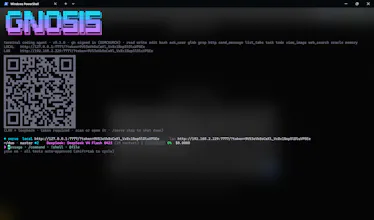
I'm 16 and built Gnosis over the summer to escape Claude Code's vendor lock-in. It’s a multi-model terminal coding agent that lets you swap models mid-session without losing history, slashing prompt costs by 12x. Gnosis wraps vibe coding in bulletproof guardrails: automated verifier loops, surgical rewinds, and 101 automated test suites. Best of all, it ships with a 3D Three.js office floor where you watch blocky figures move to desks as code streams. Run it with: npx @dominquechurch/gnosis
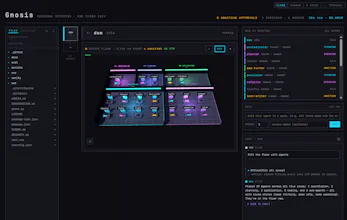
Hey Product Hunt! I am Dominique, I am 16, and I built Gnosis over the summer break before starting Grade 12 in Ottawa.I was using Claude Code and loved the concept, but I hated the vendor lock in. I wanted the freedom to spin up a complex session on Claude Sonnet for its deep reasoning, realize the task had turned into a sequence of repetitive mechanical edits, and instantly swap the model to DeepSeek mid session to save on costs. I needed to do this while keeping every single message of the conversation history intact. No tool on the market let me do that without wiping the slate clean. So, I decided to build it myself.Yes, Gnosis was vibe coded using AI tools, but I quickly realized why people say vibe coding does not scale. LLMs introduce hidden code fragility, context drift, and messy bugs. To fix that, I did not stop at a basic CLI wrapper. I built a robust engineering framework around the vibe code.First, you get dynamic model swapping mid session via OpenRouter. Prompt caching metrics show it drops cost from 2.5 cents to less than a quarter of a cent on identical tokens. Second, I built automated verifier loops where a read only reviewer pass automatically grades file diffs post turn and steers the agent back on track if it fails. Third, you get surgical rewinds where you can hit double Esc to jump backward to any clean state if the model starts hallucinating. To prove that vibe coding can build production grade, bulletproof systems, I held myself to an absolute standard of 101 isolated offline tests that run green on Windows CI on every single push.The feature everyone notices first started out as an internal joke. I felt like my agents needed a physical office to work in. I used Three.js to construct a live 3D web UI containing five lit rooms for the coordinator, planning, coding, application, and sub agents. When you prompt Gnosis, background tasks and sub agents literally walk into the office as blocky figures and sit at desks. The desk lights up when a job lands there, replacing flat text scrolling with a visual workflow you can orbit, zoom, and click. You can even scan a QR code from the terminal and drive the entire agent architecture from your phone on the couch.You can try it right now through npx with no install needed by running: npx @dominquechurch/gnosisIt is completely open source under the MIT license, reads your API keys strictly locally, and collects zero telemetry. I would love to know what you think of the architecture, the 3D layout, or how it handles your local codebase map. I will be in the comments all day to answer your questions and take notes on your feedback!