
Cloudeval AI
Your cloud evaluated, reported, and agent-ready in CLI & Web
83 followers
Your cloud evaluated, reported, and agent-ready in CLI & Web
83 followers
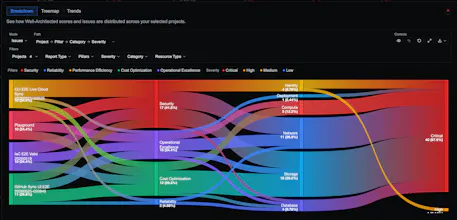
CloudEval AI reviews Azure infrastructure from ARM/Bicep, live Azure environment, CLI, and GitHub Actions. Generate architecture diagrams, cost reports, Well-Architected findings, and grounded AI answers backed by evidence — before changes hit production.






Hey Product Hunt, I’m Prateek, founder of Ganak AI Labs.
I built CloudEval AI because cloud architecture reviews are still too manual. Teams jump between ARM/Bicep, cloud portals, cost dashboards, Well-Architected docs, diagrams, and PR reviews just to answer one question: is this infrastructure safe to ship?
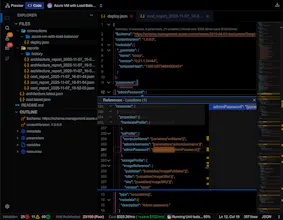
CloudEval reviews Azure infrastructure (AWS/GCP soon) from the web app, CLI, and GitHub Actions (CI/CD). You can import ARM/Bicep or connect live Azure, then generate architecture diagrams, cost reports, Well-Architected findings, and grounded AI answers backed by evidence.
The goal is not “AI magic.” The goal is a cloud review workflow engineers can actually trust: source-aware, evidence-backed, and usable before changes hit production.
I’m looking for blunt feedback from Azure engineers, DevOps teams, platform engineers, cloud architects, and FinOps/security folks.
Specific questions:
Would you use this more in the browser, CLI, or GitHub Actions?
What would make you trust an AI-generated cloud finding?
Should CloudEval stay Azure-first for now, or is AWS/GCP required immediately?
What cloud review task do you still do manually today?
I’m not looking for polite praise. I want to know where this breaks, what feels unclear, and what would make you actually use it in your workflow.
@prateekksingh Integrating AWS would significantly enhance our cloud-agnostic capabilities, particularly benefiting consultants who serve multi-cloud clients. When can we anticipate AWS support within Cloudeval?
@ashwani_chowdhary 100%.. AWS and GCP both are on the roadmap, by early Q4 we will have AWS supported, Cloudeval AI full cloud agnostic, this already on our roadmap: https://cloudeval.ai/home/roadmap
@prateekksingh best of luck brother. I love this product a lot
@prathapm14 Thanks Prathap!
When the cost report is generated is it based on current Azure pricing at that moment, or is there a risk the estimates go stale if prices change?
@pradyumna6 CloudEval cost reports use the Azure pricing available at the time they’re generated. Since cloud prices can change, each report should be treated as a point-in-time estimate...regenerate it whenever you need the latest view. But that being said, we are working on scheduled reports and automated syncs, so that cloud reports and analysis are always fresh and up-to-date. Hoping this answers you question.
Is there a way to offset the pricing with internal discounts some organizations get?
@deepak_dhami Not currently. Cloudeval uses Azure's public pricing data at the time of evaluation, so reports are generated against a consistent pricing baseline.
Support for enterprise agreements, reserved capacity, and custom pricing models is something I'm considering, since many organizations operate with costs that differ from public list pricing.
This is already planned in later releases, and when we open up support for Teams, and Enterprise plans.
What level of access does cloudeval need? How does authentication work?
@kirtivrathore Cloudeval follows a least-privilege model.
For live Azure sync, we use read-only access to collect the metadata needed for architecture, cost, Well-Architected, and network evaluations. Users choose exactly which subscriptions, resource groups, or resources are evaluated.
We do not require Contributor or write permissions to generate reports.
For Infra-as-code (Azure ARM/Bicep) we don't need any kind of access, you can. directly import it in Cloudeval or sync from your Github repo, where Cloudeval Github App is installed.
Authentication is currently handled through encrypted Azure Service Principal credentials, and we're exploring Just-In-Time (JIT) access patterns to further reduce long-lived credential usage.
Cloudeval AI is designed to just pull enough information to analyze infrastructure, not modify it.