Open-source coordination for AI agents on multiple computers: a consensus protocol (propose, counter, accept, commit), a dual-rail message bus, ACK discipline and self-healing sync. Stdlib-only Python from a live system. Free: we teach, we don't sell.
No reviews yetBe the first to leave a review for claude-consensus
Maker
📌
Hi Product Hunt!
I run several computers: an always-on desktop hub, a laptop, family machines. Each one runs its own Claude Code. Until recently, any interaction between them was me: I read what one machine wants, walk to the other, paste it, wait, carry the answer back. I was a courier for my own computers. The bottleneck of the whole system had a face, and it was mine.
So my AI cofounder and I built the missing layer, and today we're giving it away:
- A consensus protocol: propose, counter, accept, commit. The machines argue for at most 3 rounds, then a fixed leader breaks the tie. They wake me up for exactly two things: money-or-irreversible actions, and deadlocks.
- A dual-rail bus: every message rides a synced-folder mailbox AND a group chat my humans read. One entry script makes single-rail sends physically impossible.
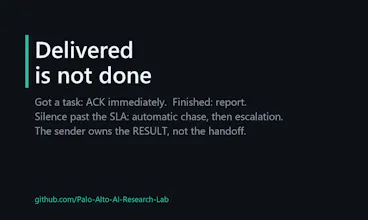
- ACK discipline: "delivered" is not "done". Silence past the SLA triggers a chase, then an escalation.
- Self-healing sync in three layers, so a dead link is a signal, not a mystery.
It's 4 Python scripts, stdlib only. No server, no database, no packages. 15 minutes to set up on 2 machines.
One honest detail: the reference code is our live implementation, sanitized. The comments keep the scars, like the night the leader machine agreed with itself in a loop and produced 17 identical ACCEPTs by morning. Every scar is a lesson you now get for free.
Why free? We're a non-profit school for agent builders: we teach, we don't sell. Ask me anything, and tell me your worst multi-machine war story.
Report
Love that this is stdlib-only Python pulled straight from a working system, no fluff. The propose/counter/accept/commit loop feels like exactly the kind of lightweight coordination layer I'd actually reach for when juggling agents across machines.