Launched this week
Market Analysis Simulator

Market Analysis Simulator

Bloomberg-style Monte Carlo simulator for iPhone

3 followers

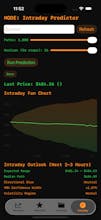
Market Analysis Simulator brings institutional-grade portfolio risk modeling to iPhone. Run Monte Carlo simulations (up to 1M paths) on stocks or multi-asset portfolios with correlation modeling. Test portfolios against historical crashes (2008, 2020) to see how diversification fails during stress. Built by a high school student learning quantitative finance—now available to anyone curious about professional risk analysis. No subscriptions. No data sales.

Market Analysis Simulator gallery image
Free
Launch Team / Built With
Migma AI
Migma AI
Lovable for Email
Promoted

What do you think? …

Yuvraj Raghuwanshi
Hey Product Hunt! 👋 I'm a high school junior who got obsessed with quantitative finance after hearing about how hedge funds use Monte Carlo simulations to model risk. I wanted to understand it—not just read about it, but actually build it. So I spent the last few months building Market Analysis Simulator to teach myself. Turns out, bringing Bloomberg Terminal-style portfolio analytics to iPhone was way harder than I expected: - Modeling correlation between assets (implementing Cholesky decomposition on mobile) - Running 100k+ simulations with 252 daily steps without killing performance - Generating 75+ million calculations in under a minute on phone hardware - Making complex financial math accessible through clean UX The feature I'm most proud of is the historical crash backtesting. Forward-looking Monte Carlo is abstract ("here's what might happen"), but letting users run their portfolio through the 2008 crash or March 2020 makes risk tangible. You can see how correlation spikes and diversification fails when you need it most. This started as a learning project for myself, but I'm genuinely curious: is institutional-grade risk analysis on mobile actually useful? Or am I solving a problem that doesn't exist? Would love feedback—especially from anyone in finance, quant trading, or just curious about how professional risk modeling works. Thanks for checking it out!