The foundational premise of this framework is a much-needed, high-leverage counterweight to the current "AI MVP" gold rush. While generative AI models have made it trivial to spin up a fully functioning prototype, basic automation, or data workflow in a single weekend, they have inadvertently triggered an explosion of unmaintainable code sprawl. By asserting that software creates value through continued operational endurance rather than the initial launch, this framework directly targets the hidden liabilities of AI-assisted engineering.
The structural victory here is treating long-term stability, dependency iteration, and team continuity as an integrated ecosystem rather than separate, siloed problems. For commercial architectures, the true cost of software isn't the initial generation; it’s the multi-year tail of keeping database transaction pools stable, managing security updates, and ensuring that when the original builder moves on, the next engineer isn't left decoding a black box of AI-generated logic.


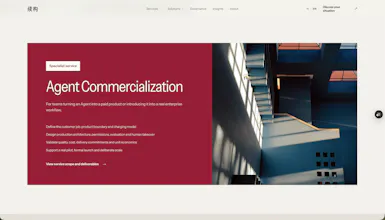

Long-term governance feels especially relevant as AI-generated code becomes more common. Does the platform also help identify reliability risks introduced by AI-assisted development?
@amjad_shaik
This is a service we offer rather than a specific product.
If you're looking for a product-based solution, please feel free to check the following reference, which may better meet your needs:
https://github.com/scanaislop/aislop
@amjad_shaik
Yes, this is becoming increasingly important.
Since we provide a human-driven governance service, we do help teams identify and address reliability risks introduced by AI-assisted development. Our experts review the codebase to catch subtle issues that automated tools often miss — such as logical inconsistencies, architectural weaknesses, maintainability problems, security risks, and long-term technical debt.
We focus on combining human judgment with structured processes to ensure AI-generated or non-R&D code remains reliable and sustainable over years, not just at launch.
Happy to share more concrete examples if you're dealing with this challenge.
@stevenleep Thanks for the detailed explanation. I like the emphasis on long-term maintainability rather than just passing automated checks. Have you found recurring patterns in AI-generated code that tend to slip past conventional static analysis?
A public changelog or roadmap page would help a lot here, showing users what is actively maintained, what was deprecated, and what security updates are coming. It builds trust when software is meant to last years and gives customers a clear signal that the team is still invested long after launch.
@halimezcalvran
Thank you for your thoughtful feedback — I really appreciate it!
We launched this service specifically to help teams solve the long-term governance challenges of AI-native applications and products built by non-R&D members. Your point about transparency and sustained investment is exactly why we exist — to provide reliable, ongoing support that builds lasting trust.
We’ll take your suggestion regarding a public changelog and roadmap seriously as we continue to develop the service.
If you’d like,
I’d be happy to share more details about how we can support your team’s specific needs.
this is one of those services where the value is basically "the incidents that didn't happen," which is a hard thing to prove or sell against. how do you actually measure success with a client a year into an engagement - is it tracked against fewer incidents/faster incident resolution, or is it more of a qualitative "the team understands the system better now" kind of assessment? asking because the second one is real value but a much harder thing to point to when a client asks if the retainer is worth renewing.
the framing makes sense in the abstract, but I'm having trouble picturing what's concretely different from a good staff engineer or fractional CTO doing code review, writing runbooks, and keeping an eye on tech debt as part of their normal job. is there a specific deliverable or process step here that role wouldn't already cover, or is the real pitch aimed at companies that don't have anyone in that seat yet and need it brought in from outside
How does this actually work in practice once the original dev team is gone, do you take over the whole codebase or more of an advisory role on handoffs?