chessvision.ai

chessvision.ai

Analyze chess position from any website, image or video.

0 followers

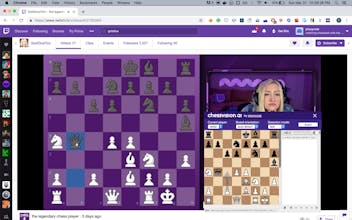
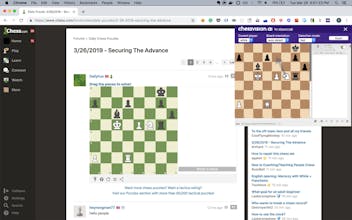
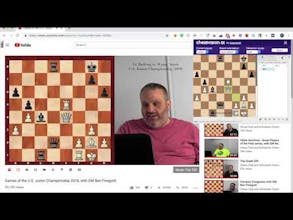
"Automatically analyze chess positions on any website and video you want. You like watching chess videos from Ben Finegold, Agadmator and others? Now you can analyze what they do why and why - live on video! Stop wondering is f6 good in this position or not?"
chessvision.ai gallery image
Launch Team
Wispr Flow: Dictation That Works Everywhere
Stop typing. Start speaking. 4x faster.
Promoted

What do you think? …

Paweł Kacprzak
Hello Product Hunt, I’m super happy to introduce you to chessvision.ai - thanks for hunting! It’s a Chrome extension (for now at least) and lets you analyze chess positions from any website, image or video in the browser. It detects the board automatically so you don't need to select any area on the screen. After the board is detected, it extracts individual cells from it and uses neural networks to classify the pieces. After the resulting position is found, the analysis board is shown where you can explore the position yourself, play it with a computer, turn the engine on/off, etc.. == A few links: Website: https://chessvision.ai Download for Chrome: https://chrome.google.com/websto... Hacker News discussion: https://news.ycombinator.com/ite... r/chess discussion: https://www.reddit.com/r/chess/c... r/MachineLearning discussion: https://www.reddit.com/r/Machine... == Features that I was asked for and I’m considering: - extension for Firefox - mobile app - live mode that refreshes the analysis board once the position on the image/video changes == More technical details if you're interested: I have to admit that I'm proud of the board detection computer vision part I implemented as it detects chessboards in quite tough circumstances - check these examples https://drive.google.com/drive/f.... It uses an algorithm that I hopefully publish in a paper soon and incorporates techniques that haven't been used so far for grid detection in images. However, the piece recognition part, although also quite strong, has room for improvements and I'll be working on it. Right now it should correctly recognize most piece themes with high probability but can struggle a bit when pieces are covered e.g. with arrows or other artifacts, but when that coverage is not super significant, the current version should also work fine. I'll be feeding the prediction algorithm with more data having artifacts like overlays etc., the idea is more meaningful data leads to better accuracy. I’d love to hear more feedback, answer all questions and have a great discussion! Thanks for all the love. Cheers, Pawel