Budgy: Budget Planner

Budgy: Simple, powerful tools to manage your money daily.

3 followers

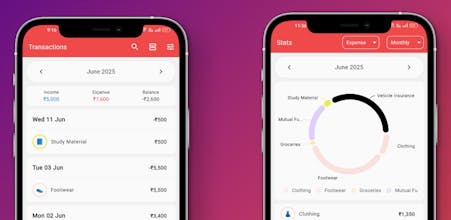
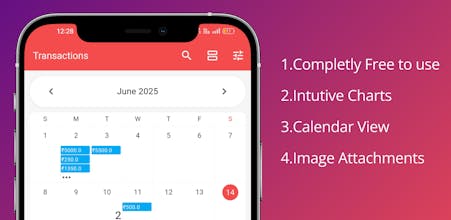
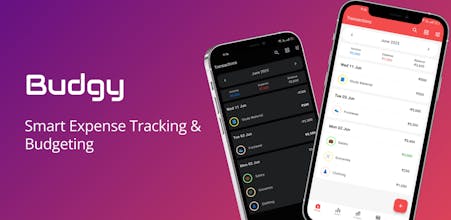
Budgy: Budget Planner is a simple yet powerful money management app designed for real-life use. Unlike traditional expense trackers, Budgy features a calendar-based view that helps users track income and expenses daily, weekly, monthly, or yearly. With multiple wallets, customizable categories, smart filters, and automatic Google Drive sync, Budgy makes budgeting clear and stress-free. A clean UI with dark and light modes ensures an easy and distraction-free experience for everyone.
Budgy: Budget Planner gallery image
Free
Launch Team
Webflow | AI site builder
Start fast. Build right.
Promoted

What do you think? …

Arun Prakash
Maker
📌
The "Budgy" Launch Story What inspired you to build this? I’ve always tried to stay on top of my finances, but I found myself stuck between two extremes: complex spreadsheets that felt like a second job, or "automated" apps that were so cluttered with ads and notifications that I stopped opening them. I wanted something that felt light, fast, and actually enjoyable to use—like a digital companion for my wallet. That’s how Budgy was born. What problem were you trying to solve? The "Mental Overhead" of budgeting. Most people quit budgeting not because they don't care, but because the tools are too high-friction. Budgy is designed to solve the "input fatigue" by making daily money management as simple as sending a text. It’s built for the person who wants to know exactly where their money is going without spending 30 minutes a day categorizing transactions. How did your approach or process evolve? Originally, I planned to build a feature-heavy dashboard with every chart imaginable. However, during the Flutter development process and early beta testing, I realized that speed was the killer feature. Users didn't want more charts; they wanted to get in, log a coffee, see their remaining daily balance, and get out. I pivoted to a "minimalism-first" architecture, stripping away 40% of the planned features to focus on a rock-solid, lightning-fast core experience.