AgentAudit

AgentAudit

The "Lie Detector" API for RAG & AI Agents

4 followers

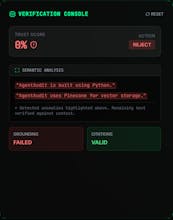
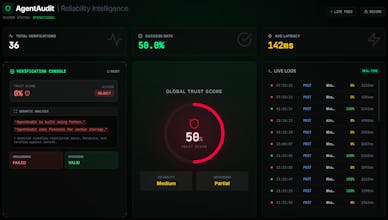
Stop AI hallucinations. AgentAudit is a middleware API that acts as a semantic firewall for your agents. It intercepts LLM responses and verifies them against the source context in real-time. Catch silent failures before they reach your users. Built with TypeScript & pgvector.
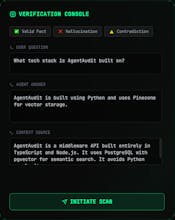
AgentAudit gallery image
Free Options
Launch Team
Intercom
Intercom
Startups get 90% off Intercom + 1 year of Fin AI Agent free
Promoted

What do you think? …

NorthernDev
Maker
📌
I built AgentAudit because I kept running into the same frustrating issue with my RAG agents: silent failures. You know the scenario. The retrieval works perfectly, the context chunks are correct, but the LLM still confidently hallucinates a specific detail that isn't in the source text. You often don't find out until a user reports it. I tried fixing this with extensive prompt engineering, but I found that prompts alone are not 100% reliable at scale. I needed a deterministic way to verify answers before they reached the user. That is why I built AgentAudit. It acts as a middleware API that sits between your agent and your frontend. You send it the retrieved context and the generated answer, and it runs a strict logic check to ensure every claim is grounded in the provided text. If it detects a hallucination or a citation error, it flags the response immediately. The Tech Stack I know the AI ecosystem is heavy on Python, but I built this entirely in TypeScript and Node.js because I wanted a strictly typed, reliable backend. Under the hood, it uses PostgreSQL with pgvector for semantic comparison. For Developers I designed this to be framework-agnostic. Since it is just a REST API, you can plug it into LangChain, Flowise, or your custom Python backend without rewriting your agent. It is fully open source for those who want to self-host. For those who just want to test the groundedness check quickly, I have deployed a free tier on RapidAPI that handles the infrastructure for you. I would love to hear how you are currently handling trust and safety in your pipelines. Is a "Judge" model overkill, or necessary for production? Let me know what you think.
Chilarai M

Amazing. How do you detect the hallucinations when LLMs answer so confidently (except when they don't find a context and says sorry)

NorthernDev

@chilarai That is exactly the tricky part since confidence scores are notoriously unreliable. Instead of relying on the model's tone, it perform a semantic proximity check. It vectorize the generated answer and mathematically compare it against the retrieved context chunks. If the semantic distance is too large meaning the answer drifts away from the source material. it flags it as a hallucination, no matter how confident it sounds.

Chilarai M

@jakops88_hub Really interesting. How much time does the API take to validate that? And also does it provide a score

NorthernDev

@chilarai It typically adds about 200-400ms of latency right now, primarily due to the embedding generation step. The vector comparison in Postgres is nearly instant.

However, i am working on support for local embedding models (ONNX), which would bring this down to sub-50ms. Also, for non-critical use cases, i recommend running it asynchronously (fire-and-forget) so the user doesn't feel any delay at all.

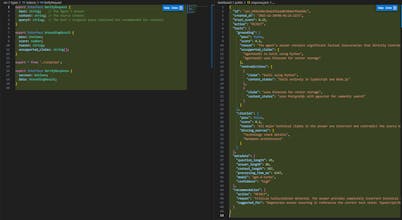
And yes, it returns a detailed JSON object with a specific Trust Score (0.0 - 1.0), so you can define your own strictness thresholds!