
Optimum Vertex AI
AI Pre-Execution Planning for Retail Investors and Traders
8 followers
AI Pre-Execution Planning for Retail Investors and Traders
8 followers
Over 100 million retail investors globally struggle to outperform the markets consistently. Optimum Vertex AI is an AI-powered pre-execution platform that transforms inconsistent trading results into disciplined, informed decisions.



Free Options
Launch Team / Built With


Render: Get up to $100K in startup creditsThe fastest way to launch and scale your startup in the cloud
Promoted
"Why did we build Optimum Vertex AI & 5 Ways Optimum Vertex AI Removes Bias to Help Traders Identify Better Opportunities"
"Trading can be overwhelming, especially with the volume of data we need to process daily. But what if AI could simplify this?
Hearing directly from the struggles that other retail traders were having in their pre and post execution, whether it be directly with other close friends, or with other retail traders across discord servers I am currently involved in, ultimately were a few reasons why this idea became a problem to go after.
In the context of investing/trading for both short and long term, the value of pre-execution due diligence and insights versus post-execution insights is situational, but for most investors & traders, pre-execution insights and decision analysis typically holds more value.
Here’s a few reasons why:
a) Decision Quality: Pre-execution insights enable investors/traders to make informed decisions before committing capital. This involves analyzing market conditions, technical and fundamental indicators, support and resistance levels, potential entry/exit points, and risk management strategies.
b) Risk Management: By understanding the potential risks and rewards before a trade, traders can set stop-loss and take-profit levels effectively, helping to mitigate unexpected losses.
c) Strategic Alignment: Pre-execution insights help ensure that trades align with the overall strategy and current market conditions, reducing impulsive or emotional decisions.
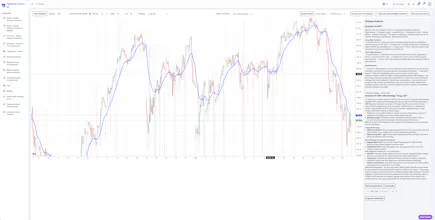
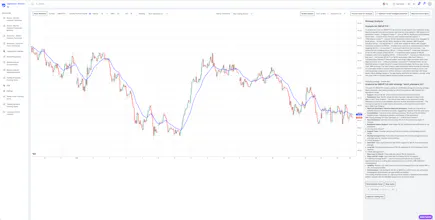
Here are 5 ways Optimum Vertex AI can make a difference for traders and investors:
1) Identifying support and resistance levels more accurately.
2) Analyzing historical price action for potential breakout points.
3) Automating trade planning based on volatility and timeframe.
4) Combining macroeconomic indicators with price data.
5) Highlighting optimal entry/exit points based on past performance.