
The Castle of Unspoken Fates
AI tarot for reflection, not fortune-telling
1 follower
AI tarot for reflection, not fortune-telling
1 follower
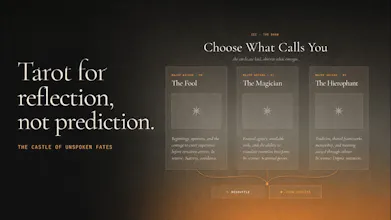
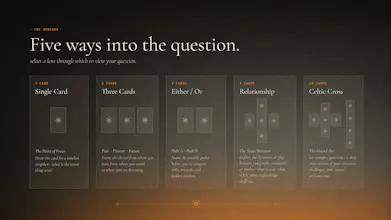
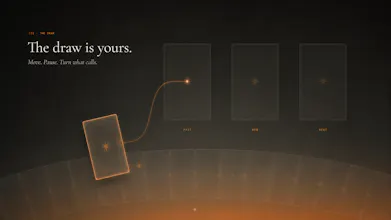
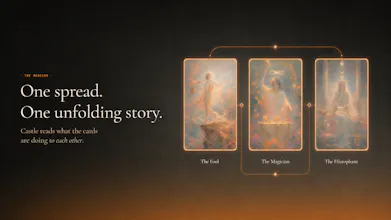
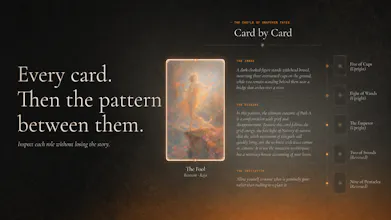
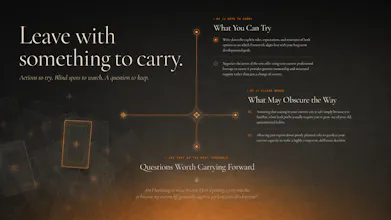
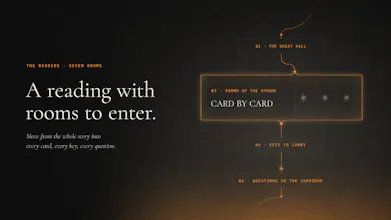
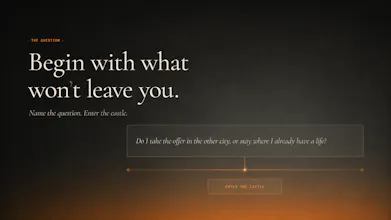
Inspired by Italo Calvino’s The Castle of Crossed Destinies, Castle is tarot for reflection—not fortune-telling. Choose a spread, shuffle, cut, and draw from a 78-card deck. Then choose local Gemma or Gemini to read the relationships between the cards as one unfolding story—not isolated meanings. Inspect every card, carry questions forward, and ask a deeper follow-up. The ritual is part of the reading.
Free
Launch Team

Framer AI AgentsDesign and publish professional sites with AI
Promoted
The name comes from a Calvino novel. Travelers meet in a castle, and they've all lost the ability to speak. So they tell their stories by laying out tarot cards instead.
There's only one deck between all of them. So the same card ends up inside two different stories — it's someone's father in one row and an executioner in the other, depending on which way you read it.
Nobody actually narrates. The meaning is in the crossing.
That's the whole design.
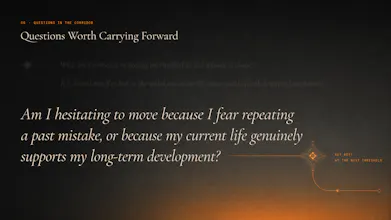
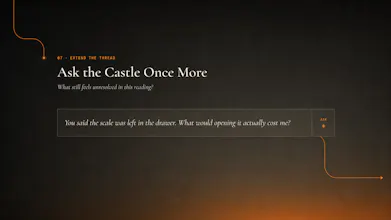
So Castle doesn't give you a conclusion and walk away. The reading opens like a thread you can pull. You can push back on an interpretation that landed wrong, ask what a card meant by that, follow one idea deeper until it runs out.
The prompt itself tells the model not to change its reading just because you didn't like it. It can clarify, connect, hand the question back to you. It can't cave.
You get three follow-ups — not because of cost, but because a thread that never ends becomes reassurance. And reassurance isn't the point.
A lookup table would stop at what each card means. This one gets the whole spread — elemental friction, repeated numbers, court-card roles — computed in code before the model writes a word.
So what reaches the model isn't a list of cards.
It's what the cards are doing to each other.
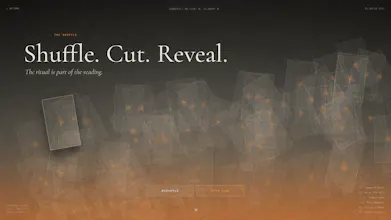
And the scatter, the reshuffle, holding a card until it turns — that isn't decoration. If three cards just appeared on screen, you'd dismiss the reading immediately.
The ritual is what makes you willing to take it seriously.
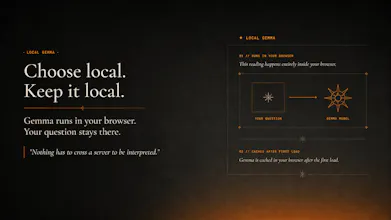
It runs locally, on Gemma in the browser. For something you might use when there's a thing you can't say out loud, that's not a feature. There's a cloud path too — one reading a day, so you can see it work in seconds. Local is the product; the cloud is a d
Tarot has been around for six hundred years. It is random enough to surprise you, but structured enough to give that surprise a shape.
You come to it asking what will happen.
But then you push back on one interpretation because it feels wrong. You linger on another because you want it to be true. You ask why one card points in one direction instead of another.
And somewhere in that process, you've already revealed something:
the future you were hoping the cards would give you.
The deck starts as the other side of the conversation.
Then, somewhere in the middle of asking, it stops being the other side at all.
It's you and you, taking the question apart.
You ask the cards where you're going.
And somewhere in the conversation, you realize you already knew where you wanted to arrive.
You don't find out what the cards know.
You find out what you already thought.