
ContentAgent
AI writing in your voice. Scored before you see it.
5 followers
AI writing in your voice. Scored before you see it.
5 followers
ContentAgent learns your voice from three interview questions and runs every generation through a quality gate that catches generic AI patterns before you see the draft. 14 templates, free to start.


Free Options
Launch Team

AskMyPagesAI answers from your own WordPress pages and PDFs, cited
Promoted
I'm Armin. I built ContentAgent because every AI writing tool I tried produced the same kind of output. Helpful hedging. The word "delve." Em dashes everywhere. A tidy rule-of-three. A motivational closer. Technically correct content, written in a voice that wasn't mine.
The fix isn't a better prompt. It's architecture.
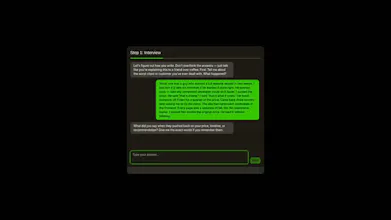
ContentAgent runs voice calibration before any generation. Three interview questions about your real business experience. Things like "Tell me about the worst client you've ever dealt with" and "What did you say when they pushed back on your price?" The model extracts your actual patterns. Sentence rhythm. Vocabulary range. What you reach for first. What you'd never say. That profile is injected into every generation as a constraint. Not a stylistic suggestion.
Then a quality gate runs before you see the draft. Eight detection categories. Sycophantic openers. Generic conclusions. AI vocabulary. Structural tells like mechanical parallelism. Metronome rhythm. Platform format compliance. If the score is too low, it revises. You only see output that passes the gate.
A specificity radar runs alongside it. Separate system. It flags sentences that make claims without proof. "Significant improvements" gets caught. "Reduced support tickets by 34%" doesn't.
14 templates. Platform constraints enforced. LinkedIn's 3,000 chars. Twitter's 280. Email subject's 60. Copywriting frameworks from Caples, Schwartz, Hopkins, and Halbert baked into the generation context, not as templates but as the model's working brief.
Built solo over three months, 11 sprints. The stack is Next.js 16, Clerk for auth, Polar.sh for billing, Drizzle on Neon Postgres, OpenRouter for model access. Around 8,800 lines of TypeScript. Live billing, working webhooks, no fake demo mode.
Free tier is 10 generations a month, every template, every quality check. Pro is $19/month for 50 generations, model picker, and LLM voice review.
I'm in this thread all day. Ask me anything, the messy stuff included. What broke. What I'd build differently. Where ChatGPT is genuinely better. Why I went with Polar over Stripe. Why the free tier is generous on features and limited on count.
One thing I'd love feedback on: when you sign up and run voice calibration, does the generated content sound like you? I genuinely want to know.
https://contentagent.kern.web.za