
Intuitum: Pocket Tarot AI for Daily Life
Tarot as an interface for tackling decisions and doubts.
1 follower
Tarot as an interface for tackling decisions and doubts.
1 follower
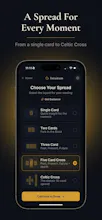
Intuitum is a quiet AI tarot app for people who want real introspection, not generic horoscopes. Scan physical tarot cards, or draw them digitally. Interpretations are written for your question, after which you can dive deeper with your digital guide. Tarot is a 600-year-old interface for accessing your own intuition. Intuitum pairs it with modern AI so the symbols do the work they were always meant to do: surface what you actually already know.



Hey Product Hunt,
I started a small studio called Technoetics: the name is a mashup of technology and noetic (meaning relating to the mind, intellect, or intuitive reason). Everything I build sits on the same thesis: consciousness is a vast unexplored frontier and (AI) technology can be the probe. I'm building instruments that let ordinary people run experiments on their own minds and contribute the results to a shared map.
Intuitum is the first app of many in that series.
The bigger picture. Every culture has invented rituals for reaching the part of the mind that doesn’t answer direct questions: horoscopes, dream interpretation, the I Ching, sortes, journaling prompts, long walks. Tarot is one of the best-designed of these: a 600-year-old, open-source symbolic system honed by millions of users into a reliable interface for getting your intuition to speak up. The trouble is that the surrounding culture bundles it with dogma and woo: predestination, spooky certainty, monetized mysticism, which most thoughtful people correctly reject, but also throw the useful part out with it.
Intuitum is an attempt to keep the interface and drop the dogma. Embrace magical thinking as a tool, not a belief system. You don’t have to think the cards know the future; you just have to notice what you project onto them. That projection is the signal. The AI’s job is to help you hear it clearly.
Most “AI tarot” apps miss this entirely. They are GPT wrappers or they return the same canned paragraph for every card, leaning into fortune-telling theatre because that’s what the category rewards. Intuitum goes the other direction: a serious reflective tool, dressed up as tarot because tarot is a surprisingly good interface for one.
Call it a Rorschach test with a UI. You don’t have to believe in anything, you just have to engage honestly with what comes up.
What’s actually in the app:
Vision model reads physical decks. Point your camera at your own Rider-Waite / Thoth / whatever. The model identifies cards, positions, and reversals. No retyping.
Context-aware interpretations. Readings take your question, the specific spread, card positions, and reversals into account. You can dial tone (grounded / poetic) and depth (quick / deep dive).
Longitudinal memory. Intuitum remembers your past readings and surfaces recurring themes. It gets more useful over time.
Spread suggestions from a question. Type what’s on your mind, get a recommended spread. Removes the “which layout do I use” friction for beginners.
Shake to shuffle. Physical gesture, digital draw. Small touch, but it matters for the ritual.
Private by default. No account required. No tracking. Readings stay on-device unless you opt in.
Tech stack, for the curious: Expo / React Native mobile, Nest.js backend, vision model for card recognition, frontier LLMs for interpretation. Built solo.
Would genuinely love feedback on two things:
Does the “tarot as a thinking tool” framing land for you, or does the word “tarot” kill it before you read the rest?
If you read tarot seriously, what would make the memory/pattern features actually useful?
Lence