
Launched this week

Claude Code Memory
Claude Code that learns your codebase over time
5 followers
Claude Code that learns your codebase over time
5 followers
Every new Claude Code session used to start from zero. You'd re-explain your stack, your conventions, your quirks. Auto-Memory fixes that. I am running a few minutes late; my previous meeting is running over. Claude now writes its own notes across sessions, project patterns, debugging discoveries, and your preferences, and picks up exactly where it left off.
Most AI coding tools have a memory problem. Not a technical one - a contextual one.
Every session starts cold. You open Claude Code, you're mid-feature, and you spend the first five minutes re-establishing ground truth. "We use pnpm, not npm." "Our API tests need a local Redis instance." "Don't touch files in /generated/." The model is capable. It just doesn't know you yet. Again.
That's the gap Auto-Memory closes.
Here's how it works:
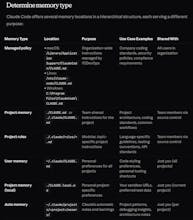
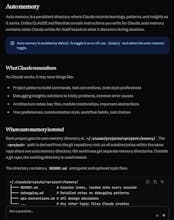
Claude now maintains a MEMORY.md file - its own scratchpad that it writes to and reads from across sessions
It captures what it discovers: your project patterns, recurring corrections you make, environment quirks, debugging context
You can also trigger it manually - just say "remember that we use Vitest, not Jest" and it saves that
CLAUDE.md stays what it was: your instructions to Claude. MEMORY.md is now Claude's memory of working with you
Think of it like the difference between an employee handbook and a colleague's notebook. One is policy. The other is lived experience.
Who this matters for most: engineers working on long-running projects with lots of conventions, indie hackers jumping between multiple repos, and teams where onboarding Claude to a codebase has been a recurring friction point.
Curious what the community thinks: have you been managing context manually with CLAUDE.md, or just repeating yourself session after session? Would love to know how your current setup handles this.